Fitful Friday: Art Still Has Truth

Pitt and Napoleon carve up the world.

It’s been one of those weeks, hasn’t it? Up and down, emotionally, as we all prepare for change. Whig or Tory, these are turbulent times.

I’ve been surprised by recent fabric arrivals in the mail, disappointed when I waited a day too long to register for a dance, and now I’m at loose ends. What comes next?

Last weekend I cut out a black wool Spencer to line in lettuce green silk because why not? And teeny tiny backstitches later, I have one sleeve finished. Focus is hard to come by of late.

I meant to join the Historical Sew Monthly to give my sewing life some structure, and I still can, though I cannot seem to settle down. Clearly, I have Firsts & Lasts that could be made (not always in the time remaining, mind you, so I would have to choose wisely).Re-Make, Re-Use, Re-Fashion? Probably much there as well– at least if one counts the quilted petticoat worn at Princeton, which was remade and altered from its original form.

July: Fashion Plate, could become the shawl gown I’ve dreamt of for years, since, as you can see above, I’ve found one that might work, lured by a fair price on a sizable piece of wool– but wherever shall I wear it? Why can I not get past utility? The Dreamstress’ Kashmiri shawl gown and her research are there to emulate, and explain.

Oh, I have projects and events to research and plan, housework to complete, and plans to execute. But they all seem abstract and unreal at the moment when we hang on the pivot point between the future and the past. It’s been a strange year in many ways and places, and constructive projects help focus.

Art Still Has Truth Take Refuge There

Long ago, in the first turbulent times I was old enough to understand, I lived in St. Louis. Then, as now, I think the Art Museum’s motto holds, and reminds those of us who work in or appreciate sometimes frivolous-seeming fields and hobbies that all our actions have meaning. I’ve thought for a long time about the utility of sewing historic clothing, cataloging objects, and running around recreating the past.

Getting outside one’s own experience is incredibly hard; it’s hard to have an open heart, and to encourage openness to others. But that’s one of the most important roles museums and libraries play: we help people develop imagination and empathy. I know it’s part of why I do the work I do. I like to think that ultimately, helping illuminate the complexity of the past will help us all understand the present and make a better future.
Frivolous Friday: Fashion Flashback

IMG_6945
I don’t know about you, but the past ten days or so have been surreal in a way that I haven’t experienced in a dozen years or so. Numerous creative folks I know are working hard to find new, engrossing projects and sharing what they find with others. As always, Satchel Paige has excellent advice: Don’t look back, something might be gaining on you.

What project shall I take up again, to distract myself from the shorter days and colder temperatures?

This is actually making reasonable progress, and might even be done by early December.
dscn4571

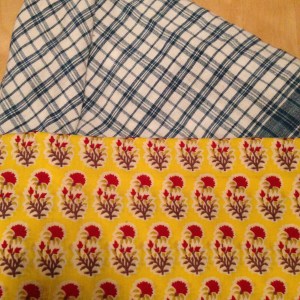
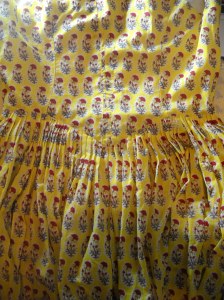
It’s satisfying work, pleating and stitching this lightweight cotton, tiny stitches in white linen thread. I’ve made some modifications to the pattern, but not many, aiming for a 1780-1782 style. Judicious cutting and generous friends will, fingers crossed, even yield a matching petticoat, which is very exciting indeed– and an unusual fashion statement chez Calash. Here, we focus on clash, but the fabric itself takes care of that for me.

Now, if only I had bright red morocco leather shoes to wear with this, that would be a sight indeed.

Frivolous Friday: Flip your Lid

Print. Drypoint by John Theodore Heins, Jr. 1747-1771. British Museum 1858,0417.362
Drypoint by John Theodore Heins, Jr. British Museum 1858,0417.362

Bonnets. Who doesn’t like them? They’re the cupcake of costuming, just enough sugar to be delicious, not enough trouble to count. I know I have far too many, they fall from the hall shelf nearly every time I get my coat.

But I started asking myself questions about bonnets when a friend asked me questions about bonnets: shape, color, and how they’re worn (rakish angle? pulled down low?).

We’re planning on going to an event in March, and I’ve been thinking about head wear, especially bonnets. Now that the question’s been asked, I don’t want to randomly cram black silk taffeta on my head and call it a day: I’m back to “don’t know mind.” Time to start looking. So far, I’ve searched the Tate, the British Museum, the National Portrait Gallery UK, the Lewis Walpole Library, the Yale Center for British Art, the Met,  the V&A, and the BBC’s Your Paintings site.

I started at the British Museum. Here are the results for a collections search using the term bonnet and the production dates 1765-1772.  Hmm. No classic black bonnet. Dammit, actually, because I really like mine.

Print made by James Caldwall, A Ladies Maid Purchasing a Leek, 1772, Line engraving and etching Yale Center for British Art, Paul Mellon Collection. B1977.14.11105
James Caldwall, A Ladies Maid Purchasing a Leek, 1772, YCBA, B1977.14.11105

Yale Center for British Art, same search parameters. I know you know this print.

Man, this is a pain, right? Where are the bonnets? 1772 is actually too late for my purposes in this instance.

The Lewis Walpole Library Digital Collections lack a feature for limiting or sorting by date, but they tag bonnets in their prints. Still: no big black bonnets in early prints.

I’m starting to think it’s lampshade or saucer for the 1765-1770 period. You remember lampshade, don’t you? One of my post-operative slightly narcotized creations based in part on the Marquis of Granby (Relieving a Sick Soldier).

The Marquis of Granby (Relieving A Sick Soldier) Oil on canvas by Edward Penny after 1765 (c) Royal Academy of Arts
The Marquis of Granby (Relieving A Sick Soldier) Oil on canvas by Edward Penny after 1765 (c) Royal Academy of Arts

Lampshade seems pretty fashionable in 1760. There are more portraits at the National Portrait Gallery (UK), but bonnets are scarce in them, primarily, I suppose, because they are not indoor wear.

Lady Fenoulhet is wearing a lampshade. Nelly O’Brien is wearing an interesting, more hat-like device. Her imprint is ca. 1765-1780, but other impressions are dated ca. 1760. The 1762-1764 seems plausible. But that’s still early for my purposes. The lampshade really is, too; Mrs Mary Smith of Portsmouth may be wearing one, but considering that the artist who drew this plate died in 1766, I think we can place this form in the 1750s to early 1760s. Lampshade is too early. The”Lady’s Maid buying a Leek” is too late.

Next, please.

Frivolous Friday: Checkin’ it Out

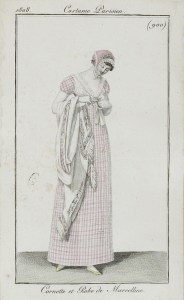
Costume Parisien 1808 Cornette et Robe de Marcelline
Costume Parisien 1808
Cornette et Robe de Marcelline

One gets ideas. I often get ideas about checks. In particular, I get ideas about loud checks. The gown in the fashion plate is appealing, when you’re looking for checks, and all the more so when you know how similar it is to an extant garment in your actual location.  The cornette I can do without– that’s the headgear, which looks like she’s crammed a sugar Easter egg on her head– but at least it could hide a short hair cut or the melting pomade of humid summer.

Costume Parisien 1808 Chapeaux et Capotes en Paille Blanche et Rubans
Costume Parisien 1808
Chapeaux et Capotes en Paille Blanche et Rubans

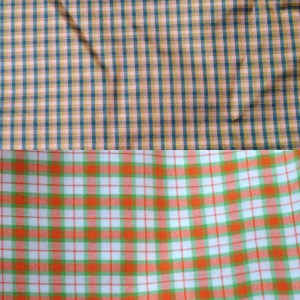
But wait! What check through yonder tastefulness breaks? It is the fashion plate, and  the checked bonnet is my sun. My goodness, that bonnet on the lower left is satisfying. It appeals to me the most because it is by far the most check-heavy bonnet I’ve seen, and making it would not involve plaiting straw, which I know nothing about. It’s a direct trip to obnoxious via silk taffeta, and that’s a trip I’ll buy a ticket for.

Top: check silk taffeta, Artee Fabrics Bottom: check cotton, Mood Fabrics
Top: check silk taffeta, Artee Fabrics
Bottom: check cotton, Mood Fabrics

Actually, as the result of a train ticket last August, I am the proud possessor of some delightfully bright lightweight cotton check in search of a fashion plate. The year I’m targeting (which is not 1808, but 1818) hasn’t yet provided published inspiration, but there are more places to search. In any case, an orange check gown with a blue check bonnet is pretty much crying out to be made. Bring your hanky, in case your eyes water, but make sure it’s check, too.