Feeling 1820ish

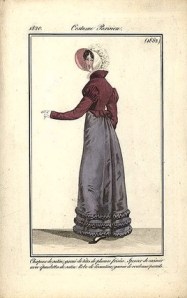
Walking Dress, 1820
Walking Dress, 1820

For no good reason, I’ve been feeling 1820ish. This is a huge distraction from my primary objectives, which for the short term are 1775, 1799, and points in between. The in-betweens depend on what unit Mr S is fielding with, and at which event. Monmouth, for example, is the 235th of the battle fought June 28,1778 in New Jersey. The Second Helping regiment was at that Battle, (I checked the order of battle and know from diaries like Jeremiah Greenman‘s) and that means that his regular old hunting frock (called the “fluffy shirt” by my Facebook friends) would do, if—and only if—he fields with the Second Helpings. If not, then it is another piece of work altogether. Major casualties at that engagement were from heatstroke, by the by, so it may be that wearing two layers of wool in New Jersey in June is not recommended by most physicians.

But I digress, yet again.

e14fa91f099434a95ac644c723e8cfaa

I am feeling 1820sish because Robert Land has, at long last, shipped my Regency Lady’s Boots. They should arrive by Saturday, and for having ordered them in mid-October for a mid-January event, we are actually on fairly normal Robert Land time. Sigh. I’d get mad, but the man’s shoes fit my pedal extremities, which really are colossal.

So the boots are on their way, in green, and while they won’t be exactly like these, they can be modified, with blue laces to begin with, and tape later. 

And that has led me to think about the obstreperous bonnets of the 1820s, like this fantastic quilted item from the MFA,

Quilted Bonnet, MFA

There are dresses at the V&A for which I have comparable fabric, and Spencers at the Met, and many fashion plates to delight (see the Pinterest board. I may not get any of these things made, but they’re fun to think about—especially the bonnets.

This is all supposed to be fun, isn’t it? It’s surely more fun than moving 18,240 books (some of them twice) which we did this past week at work.
A Visit with the Ladies

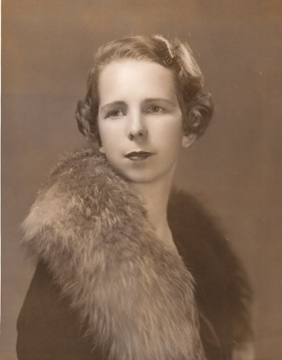
The apple never falls far from the tree, my mother used to say, of me and my grandmother, her mother, Elsa. Elsa went to a woman’s college, majored in botany, graduated in the mid-twenties, and went back to western New York State, where she opened an eponymous dress shop.

Elsa, Studio Portait ca 1935
Elsa, Studio portrait ca 1935

Elsa managed that shop for more than 50 years, dressed most of the women in town (or at least the type of woman who knew how to dress, and be dressed), and even dressed a woman who later became a donor to the architectural collection I managed in St. Louis.

She was a controlling woman, no doubt, and carefully managed and cared about her appearance. She was also a lady of a steely, ladder-climbing type native to the 1940s and 1950s, full of the foibles and desires of the daughter of immigrants who spoke Swedish at home. The stories they told about her would make a cat laugh: the day the local radio station called and Elsa answered the phone (on air? That part was never clear) to find out that the household had won a month’s supply of white bread.

“Oh no,” she said. “I don’t believe we care for that,” and hung up.

Not of the quality to which she had become accustomed, you see: she insisted on some picky particular white sandwich bread for fancy lunches, and otherwise ate the limpa rye the cook or  Ingeborg made. All the household help was Swedish, as were the women who did alterations at the shop.

Elsa married late, at 35, and her husband moved into the house she shared with my great-aunt and their father, August, known as Morfar after my mother was born. Buying trips to New York for her store resulted in the delivery of boxes from Saks Fifth Avenue, deliveries that came so often, in such quantity that my grandfather questioned her.

“I don’t know,” she said. “They just keep sending them.”

Elsa in Italy ca. 1980

They were boxes of shoes, spectators and sling backs, pumps, court shoes, Cuban heels, stilettos, peep toes, sandals, every kind of shoe you can imagine, and all in brown, tan, beige, ecru, off-white, cream, none of them black or red or blue or green. Beige: that was her signature color, beiges and browns with occasional accents of coral or green or gold. She assigned blue to her younger sister, my great-aunt Gladys, and when Gladys once dared to buy a beige dress she liked, Elsa had a temper tantrum. A quiet one, but effective.

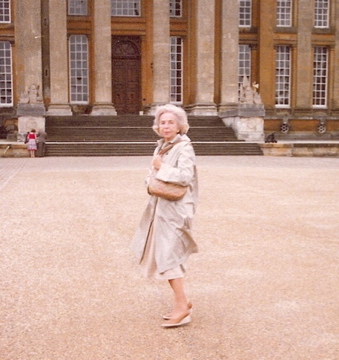
She died before she could meet my husband, died before I was married, and I am sorry about that. But I remembered her this week when I went with my friend (and Registrar) to visit two older ladies, sisters, on the East Side. We picked up a collection of clothing worn when the two ladies (now in their early 90s and late 80s) were babies, the wedding dress their mother wore in 1918, the dress one wore in 1939 that her daughter wore again in 1970, with quite the wrong black moccasins, at a Christmas Eve party in Georgetown.

The sisters reminded me of my grandmother and aunt, and the clothes reminded me of what my grandmother sold and boxed and wrapped in her store. Sitting at the mahogany table for lunch, drinking tea and eating a slightly stale roll, I missed Elsa and Gladys terribly, but was glad for all they’d taught me about how to behave and what the world was like for independent women in the 1940s and 1950s

Weekend at the Farm

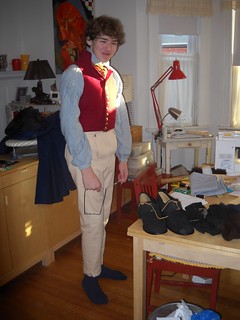
The Young Mr in his new clothes

Fourteen year old boys don’t like to get up early, but we managed to rouse the beast on Saturday, and get him dressed, with only minor hostilities. He’s wearing all new clothes, except for the shirt, which I hope will not have to be replaced before the end of the summer. (I have now guaranteed that his arms will grow several inches in the next week.)

Mr S wore his new waistcoat but it’s hard to see under his jacket. He also got his new hat from Mr B, so he could upgrade from his knitted cap.

New hat, new waistcoat

There are more photos here, including a fabulous stuffed leg of lamb. For mid-day Saturday, we ate a meat pie (pork and apples), sugar cakes, coriander biscuits, bread and molasses bread, all brought from home, along with hat from the farm boiled with parsnips, potatoes, carrots and onions and a carrot pudding. We also made a potato-apple-onion pie for the evening meal, though Mr S, the Young Mr and I did not stay. There is a limit to what the child will tolerate.

Sunday, we arrived in time for Mr S to make more fence pegs, while I joined the kitchen to make soup with ham, squash, parsnips, and onions, which we ate with bread and cheese, and the last of the sugar cakes, for lunch. All the while, a leg of lamb was cooking, masterfully prepared by Mrs B, and stuffed with cubed bread, onion, ham, sage and onion. To go with it, we made a rice pudding with apples, wilted greens, salad, squash pudding, and stewed apples. The sauce for the lamb was particularly fine, with drippings, minced onions, what we think was whiskey, butter and cream. I learn so much cooking with Mrs B!

waiting, wanting, hoping

The cats wanted, but were disappointed. They were calmer on Sunday, though extremely attentive kitchen assistants both days. Pity they don’t do dishes. There were plenty to wash. 1799 was definitely greasy. Even the striped cat feels a little greasy, but that could be because he’s handy to wipe your hands on.

Now it’s on to sewing for something else, though whether that will be wool trousers or clothes for Washington’s Birthday, I don’t really know.

HSF # 1: 1813(ish) waistcoat

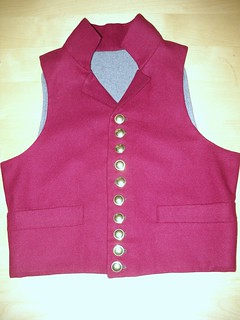
Waistcoat, my waistcoat

The Challenge: #1, __13

More photos here.

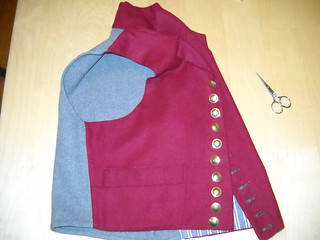
Fabric: Fronts, 100% wool leftover yardage from a petticoat. Back, wool broadcloth left over from remnant (is that a remnant remnant?) purchased for Mr S’s short jacket. Lining, heavy-weight linen.

Pattern: Kannik’s Korner Man’s Waistcoats, 1790-1815

Year: You can call it 1813. This style works for a couple of decades, though it will be worn for 1799 this weekend. Time machine, anyone?

Snazzy, right? This color is closer to the actual color.

Notions: 10 domed brass buttons with rims; silk buttonhole twist, both Wm Booth Draper, and some interfacing from the Franklin Mill store.

Red Waistcoat, MMA

How historically accurate is it? Well…the pattern has good documentation and the fabric is within reason for the period. The waistcoat is entirely hand-sewn, and the coarse linen pocket linings match extant garments in collections. So I know that’s good. And as it turns out, I completely and inadvertently made…this! So excited to find this! More excited than you’d expect! First quarter 19th century means 1813 is A-OK!!Also, that waistcoat is HOT! So I think I have achieved pretty accurate, even if it will be used in a time machine back to 1799. 

Hours to complete: This was much faster than the first one. 12 hours for cutting and sewing, with about 3 hours just on button holes.

First worn: To be worn by the new owner (The Young Mr) January 19, at the Winter Frolic

Total cost: Since I used fabric left over from a petticoat and the jacket, I’d say the cost was really only in the buttons, so $14.50.