How long does fabric need to ‘season’ in your stash?
I like to savor yardage for half a decade or so, as once I have fabric I really like, I never think I’m adept enough to use it. I need to build up more skills before I cut into that silk/wool/what-have-you.
So, five years ago or so, I bought some lovely blue homespun from a friend who had determined she would not manifest her plans for it. It’s the same Burnley & Trowbridge fabric that Mr. K’s 1824 coat was made from, just not washed, and thus retains a smoother texture.
There was not quite five yards, but that never matters. Josie and I argue about whether or not I can make what I have work, and while she always says no, I can usually get an English gown out of four and a quarter to four and a half yards if the fabric is wide enough.
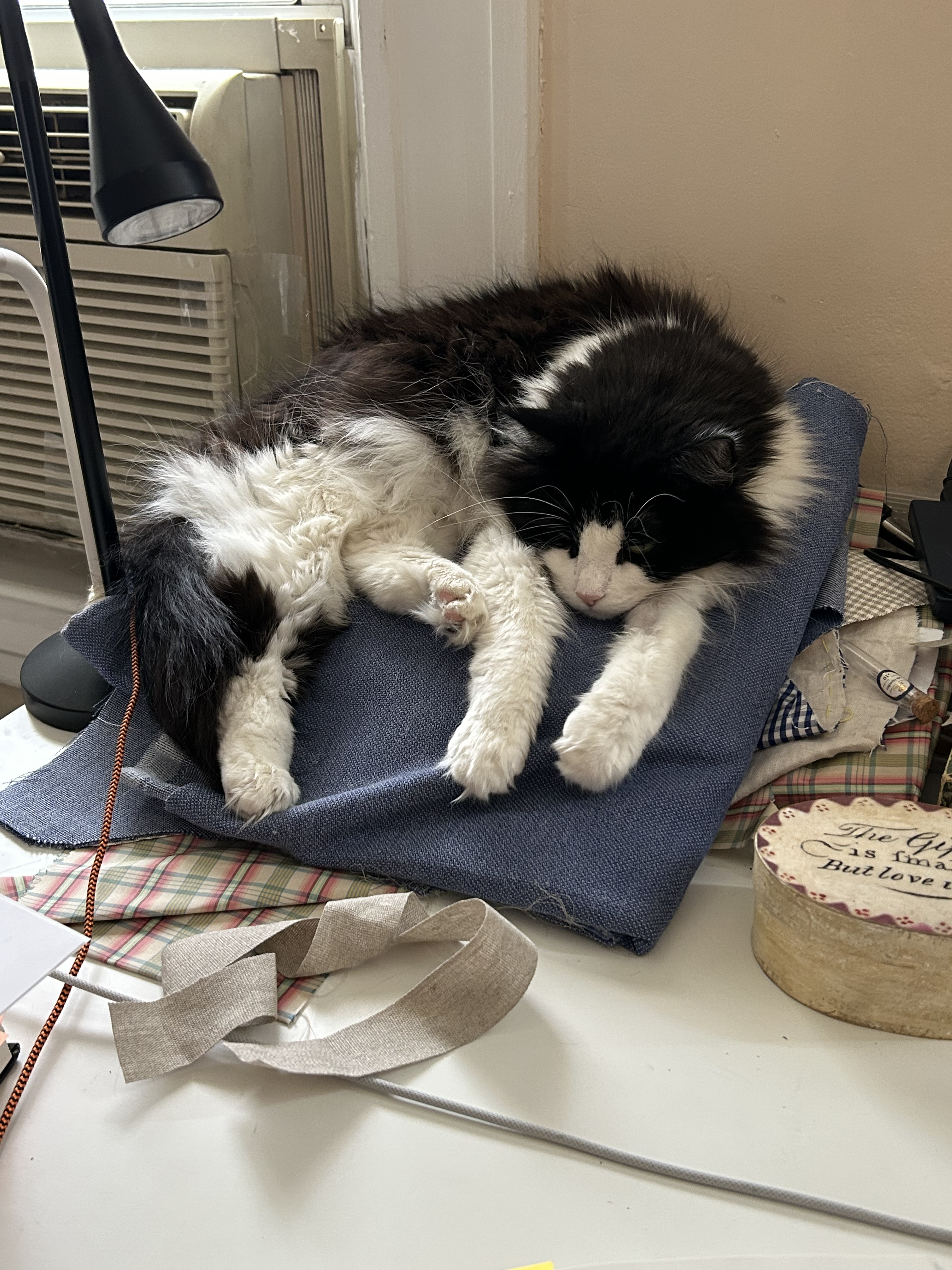
It took long enough to make that the fabric became a bed for the cat.
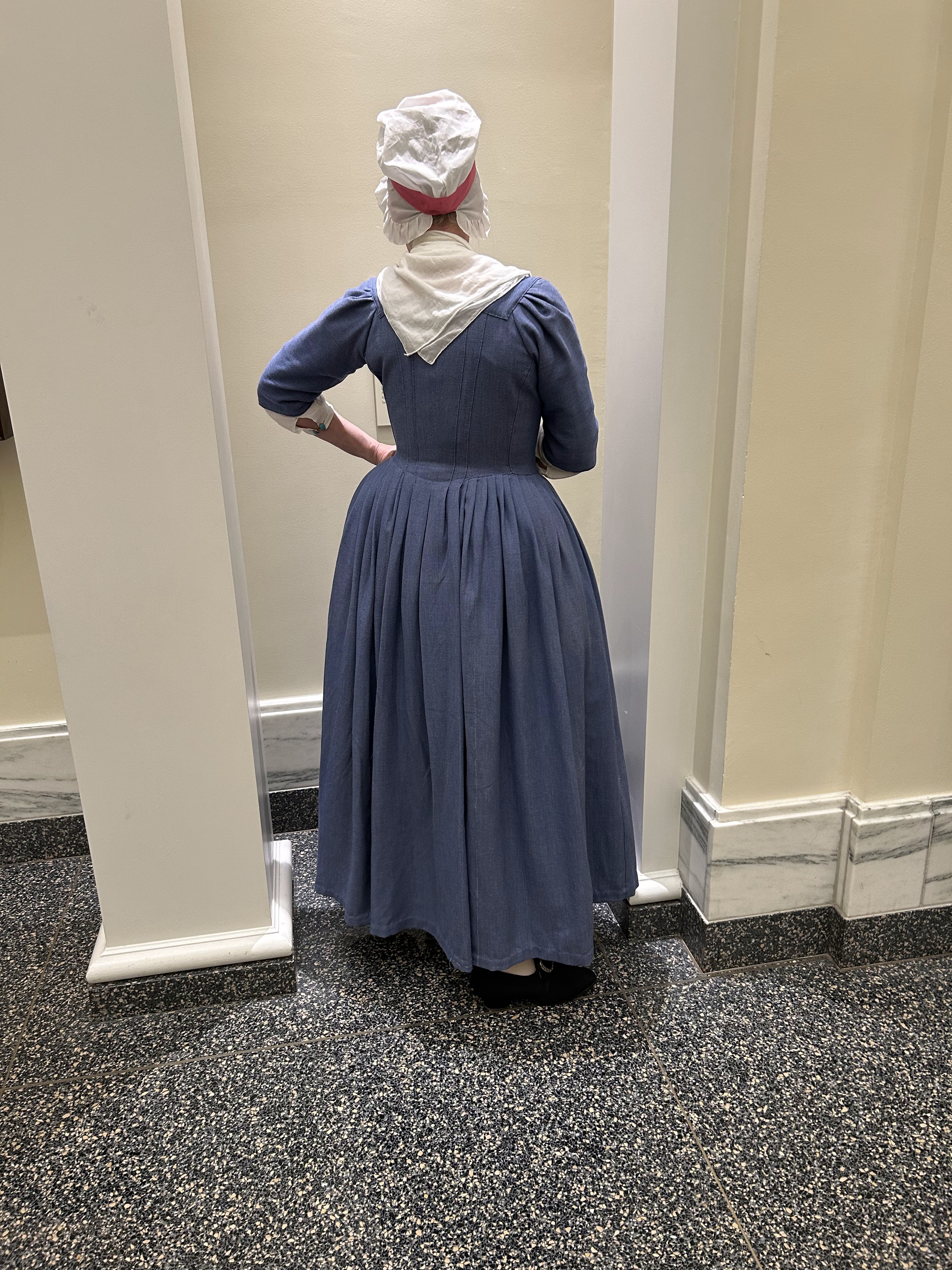
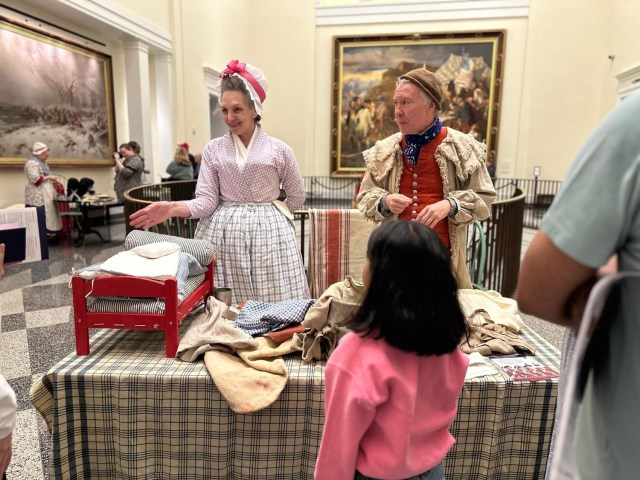
I was interrupted in the process: I took two classes this semester, taught a workshop, went to a friend’s birthday party in Philadelphia, tried to buy a house, and endured the world. I was glad to get back to the work, though, since sewing is always satisfying. It’s “just” another English gown with a pleated back and stomacher, in classic blue. I wore it to the Makers’ Event at the Museum of the American Revolution in May, just days before my final papers were due.
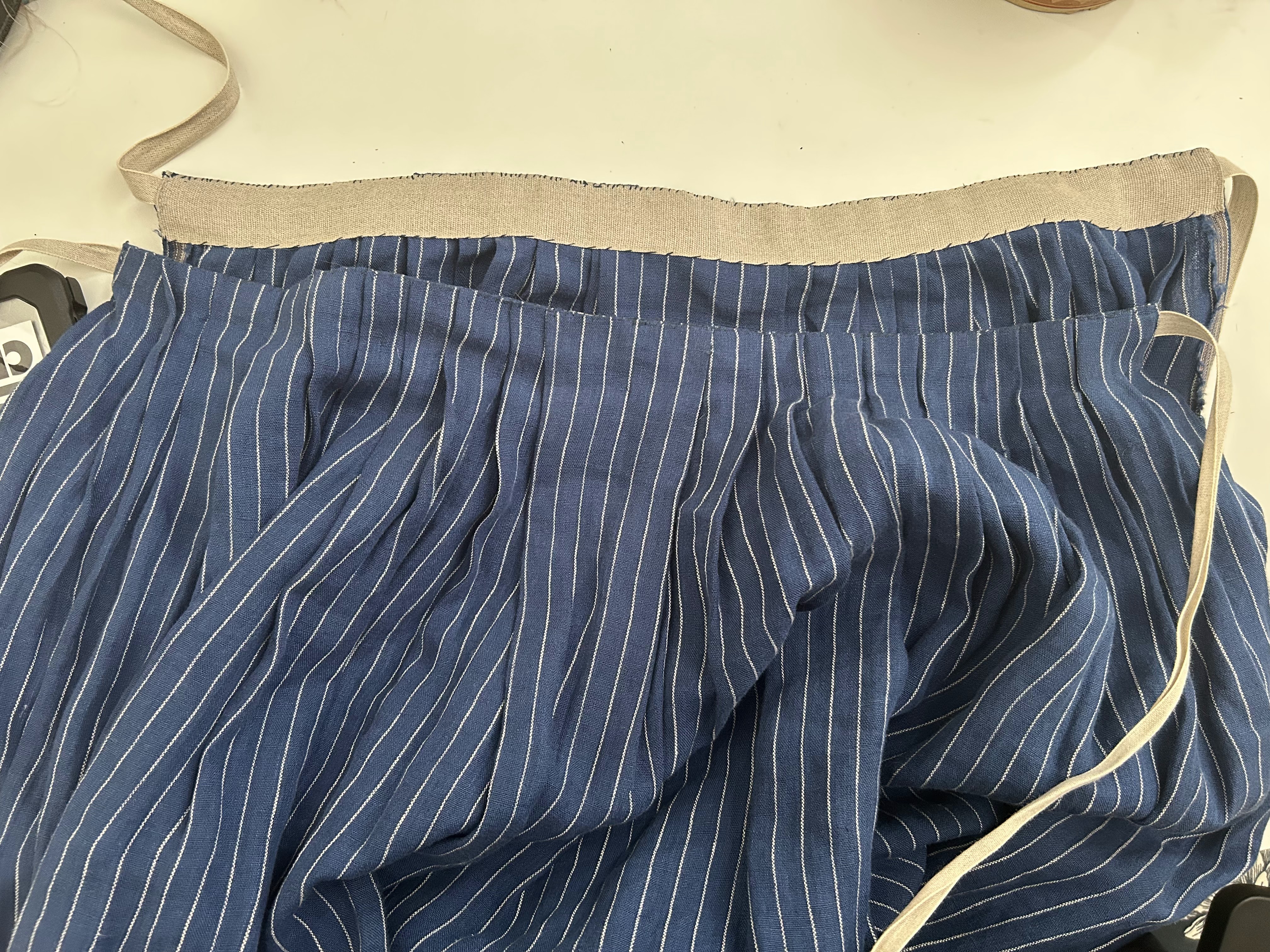
To make it fully a colonial lady stereotype, I wore it with a blue petticoat. The petticoat was remade from the first gown I ever made. Not only did the gown no longer quite fit, it wasn’t made to the standards I live by now. The linen was far too nice to let sit, another Burnley & Trowbridge fabric from over a decade ago.
With a brief, sort-of-break from school, I have time to think about the research and making I’ve done recently, if “recently” can encompass the past two-ish years.
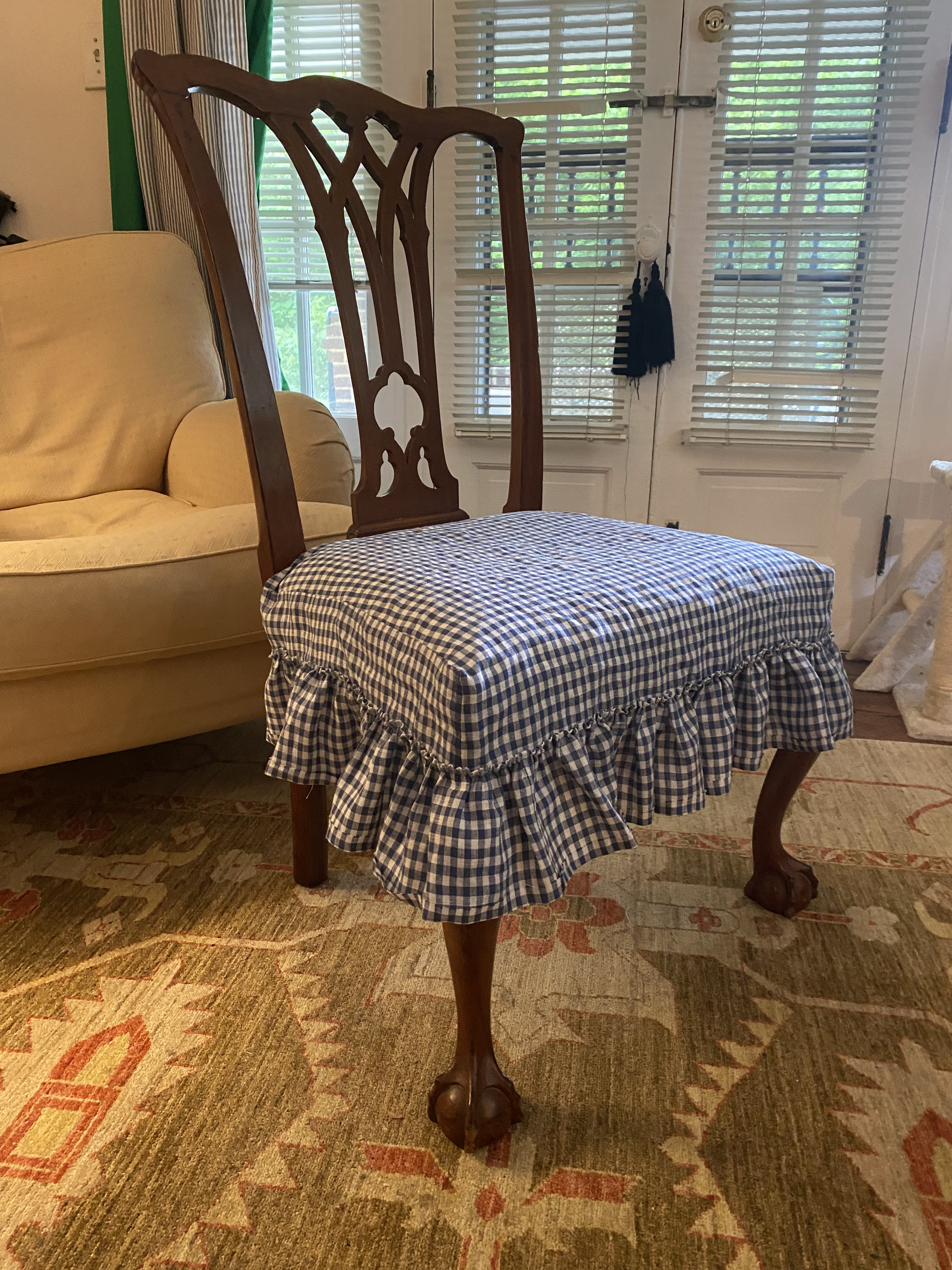
Last May, I made a slipcover or case cover for a Chippendale side chair. I love this chair very much and while I have not (yet) recovered the slip seat in something more appropriate, a case cover seemed appropriate.
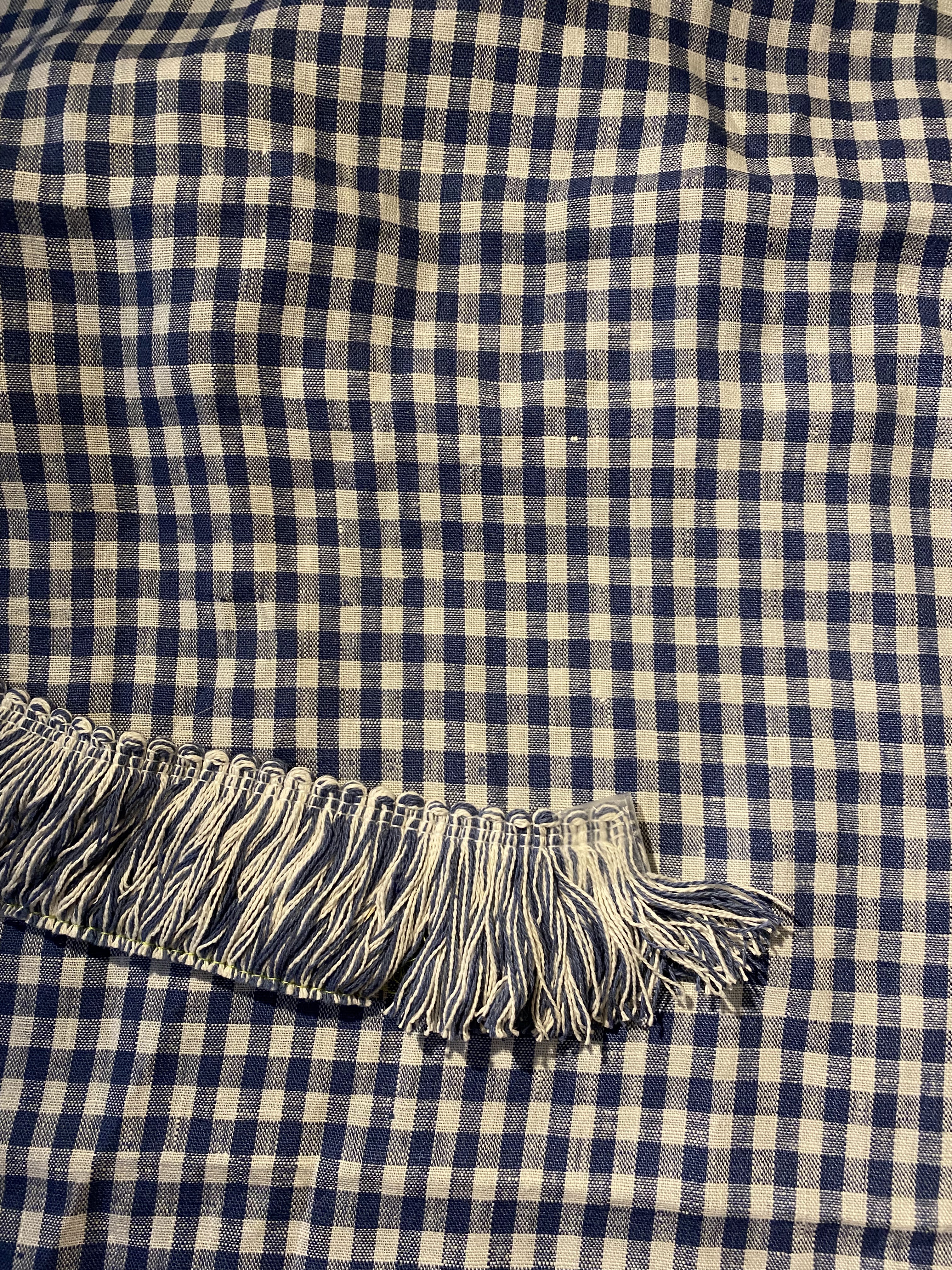
I am under no illusion that this chair is Cadwalader quality, but it offers the opportunity for crossover between my upholsterer and Cadwalader obsessions. When John Cadwalader was outfitting his townhouse on Philadelphia’s South Second Street in 1770-1772, he ordered covers in fine Saxon Blue check, with fringe, for his chairs.
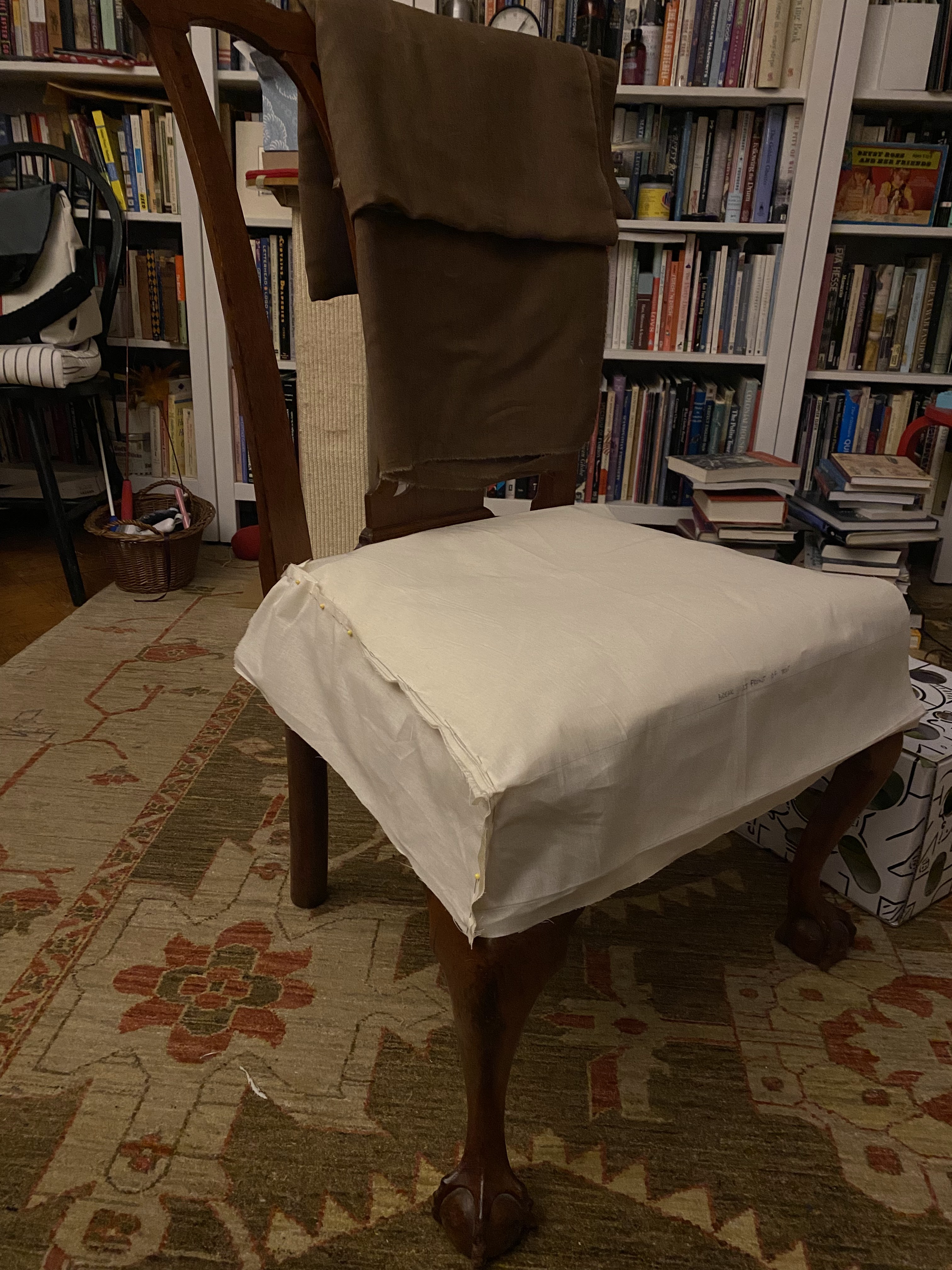
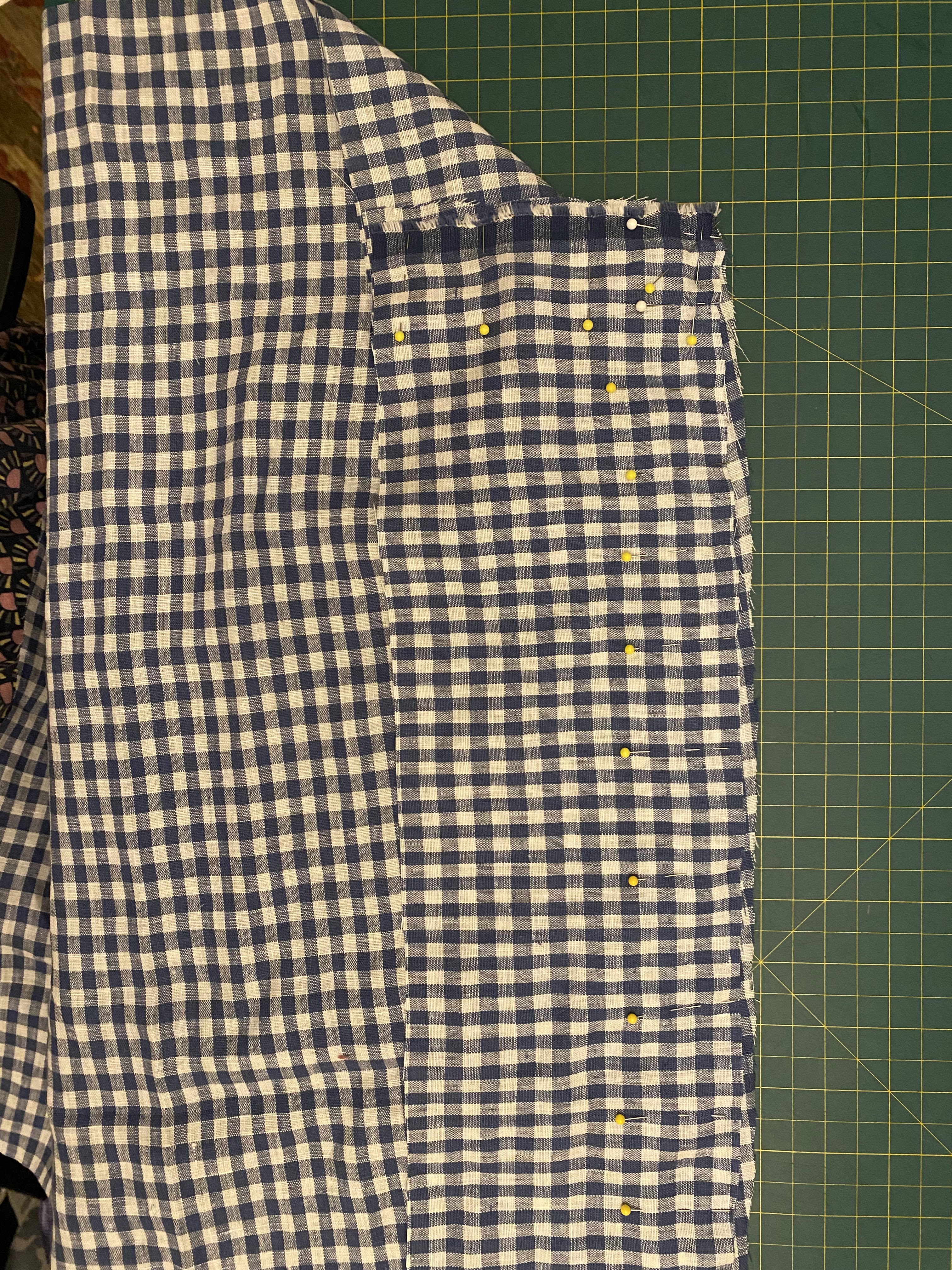
I started by making a muslin to create a pattern; this seemed like a better idea than just using measurements. It’s really a simple design: a top (the seat), front and sides, and a ruffled skirt. I based this on an original at Colonial Williamsburg. The cover attaches at the back with quarter-inch linen tape. I ordered fringe, but not enough, so for now, the cover remains fringe-less.
Checked or striped linen was a common material for covers, durable and easily washable. Yes, this is where “furniture check” comes from: the large-scale checks used for these and other covers. (Samuel Johnson’s are particularly bold.)
Linen covers protected expensive upholstery (wool or silk damask, for example) from wear and light damage. Covers could be switched seasonally, but they were almost always made “en suite,” that is, in the same color as the wall coverings and/or curtains. The Cadwaladers had a blue room and a yellow room, both of which must have been like walking into a jewel, with shimmering silk damask on the walls, as curtains, and upholstering the furniture. My cover may be simpler, and my house un-jewel-like, but I love it just the same. (It also fits other chairs, like this one at Historic Lewes.)
This is an IKEA bed for children or cats, so it’s an affordable, durable option for hands-on demos. It’s reasonably easy to adapt, with a chisel and a drill (Mr. K has a little drill press which made the rope-bed conversion much easier).
I outfitted the bed with woven ropes and a sack bottom, designed to make the bed more comfortable (the mattress can’t sink through the sacking). That’s topped with a a bed (mattress) of ticking stuffed with wool.
Bed with sacking bottom laced to ropes
Beds were stuffed with a range of materials, including straw, cattails, cornhusks, hair, and wool. Hair is pretty itchy and I had wool on hand; in graduate school round one I slept on a wool futon so I can attest to its loft and comfort.
A feather bed tops the wool bed, feathers stuffed into a linen bag stitched shut. The linen is pretty tightly woven vintage material, and still the feathers escape! The case of checked linen ties shut. A ticking bolster, also stuffed with wool, supports the feather pillow in its linen case. The top sheet is, again, linen, with a center seam to mimic historical sheets.
This week, I started making the blanket. Modeled on an original rose blanket in the Colonial Williamsburg collection, I used wool broadcloth cut from a remnant. This, too, has a center seam like most originals. I have a stash of wool thread for embroidery, and matched the colors as best I could. It’s satisfying work, though I discovered that I’ve been stitching the wedges incorrectly (this is the result of having a laptop, rather than a large monitor). Oh well. I’ll stitch the last rose correctly.
Left, Colonial Williamsburg original; Right, my first attempt
The Workwoman’s Guide lays out how a bed should be made up, with layers of mattresses (beds), a feather bed, sheets, counterpane, and blankets. It’s a lot of layers. The Workwoman’s Guide was published in 1838, and although it is always dangerous to engage in backward interpretation (i.e. to apply the logic of 1838 to 1778), it is not unreasonable to think that an eighteenth-century bed would be similarly furnished. In houses without central heating, layers would be necessary.
While sheets and blankets could be made at home (butt-seaming linen or wool is easy), wealthy folks without enslaved laborers could order sheets and blankets from seamstresses or upholsterers. Betsy Cadwalader did not make her sheets, and while Martha Washington stitched cushion covers, the labor for the slipcovers or case covers was likely accomplished by enslaved seamstresses. The Cadwaladers ordered their case covers from Plunkett Fleeson, who probably had the work done by women rather than by more expensive male workers.
The new blanket will debut at the Museum of the American Revolution on Flag Day weekend, and I will once again talk about women’s work in eighteenth-century Philadelphia as they pivoted from domestic to military work during the Revolution.
The Marquis came back (or his analog did, at least) last October 7, and we were there.
Hell’s Dandies at Fort McHenry
Way back in January 2024, Mr. K and I were asked by the Museum of the American Revolution if we would be interested in joining them (and their tents) at Fort McHenry to celebrate the Lafayette Centennial in Baltimore at Fort McHenry. Of course, I said yes, figuring that 10 months or so was ample time to prepare.
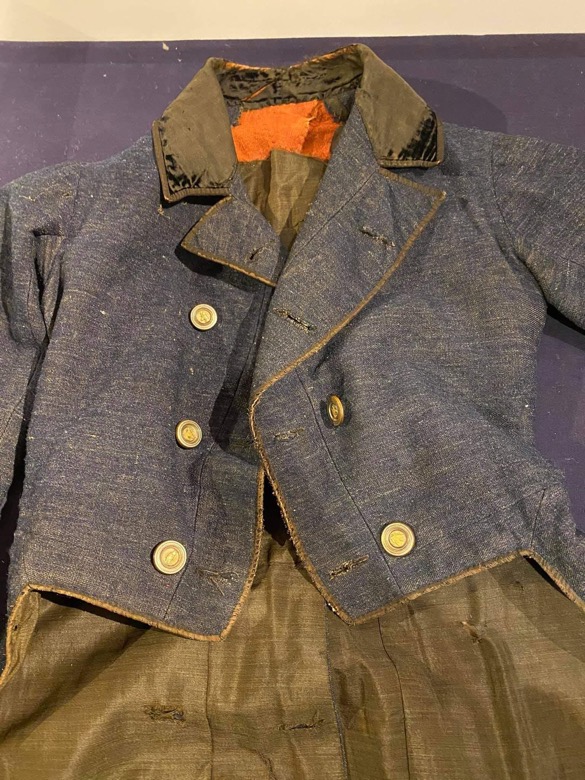
The coat, posted on social media in February 2021
Reader, I began a dress in a workshop in May. I made another dress to wear and finished it the evening before the event. Why am I like this? (ADHD, I think.) Mr. K needed a new coat, so I patterned one for him to stitch from an older Burley & Trowbridge homespun. In 2021, someone (Genesee Country Village & Museum, maybe?) posted a fabulous image of a coat and waistcoat, which was the primary inspiration, along with coats including a blue broadcloth number at the DAR seen in the An Agreeable Tyrant exhibit. (Sadly, not in the online gallery.)
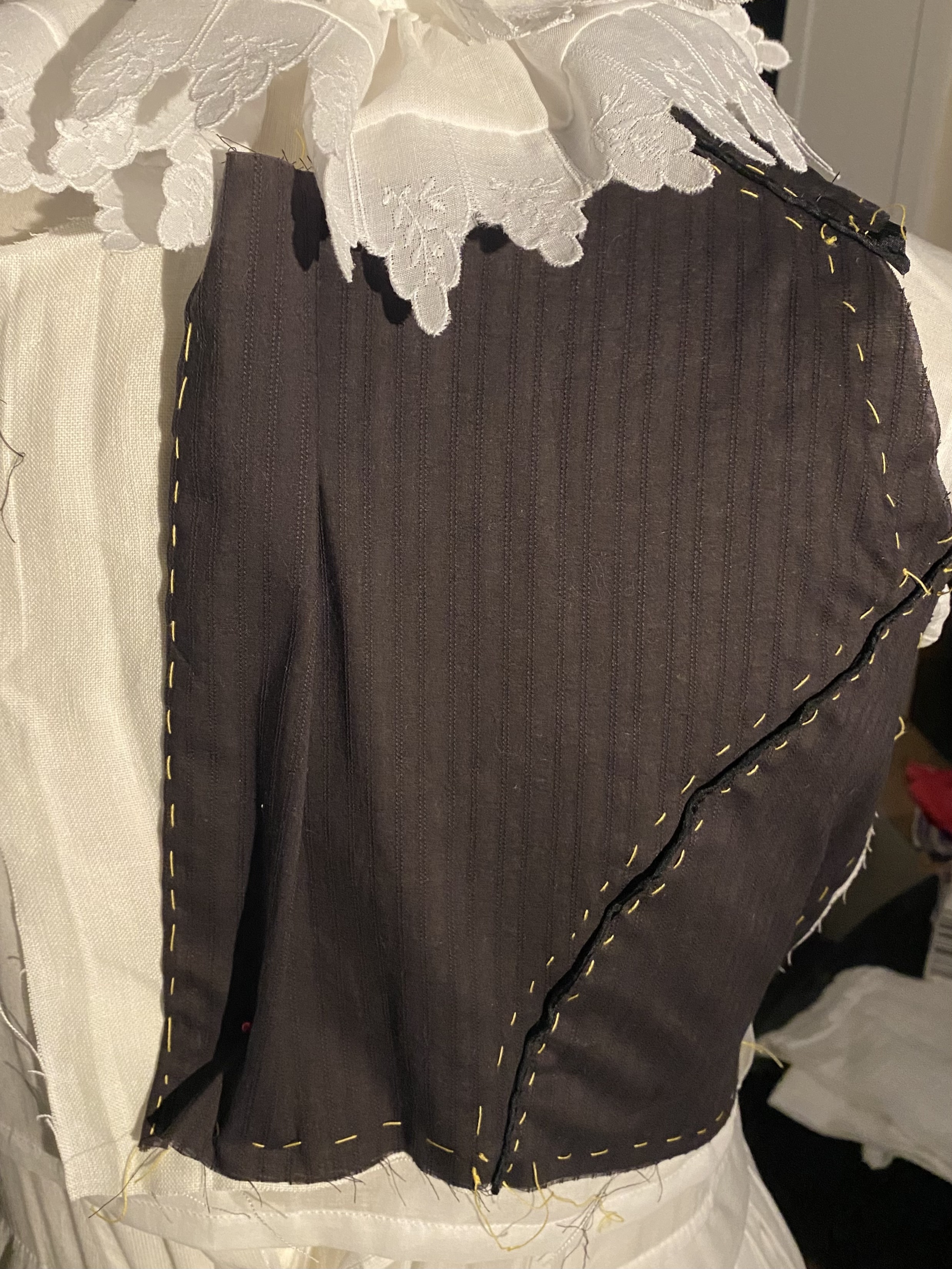
In progress: bodice back with piping in place
An Agreeable Tyrant also provided the inspiration for the dress I wore. I had almost too little sheer purple cotton fabric with a woven stripe, purchased at Lorraine Mill in Pawtucket a very long time ago. I meant to make an early 1800s gown, and had even started on the bodice around 2018 when life began to go very sideways and I stopped. I loved the fabric, though, and the deep color.
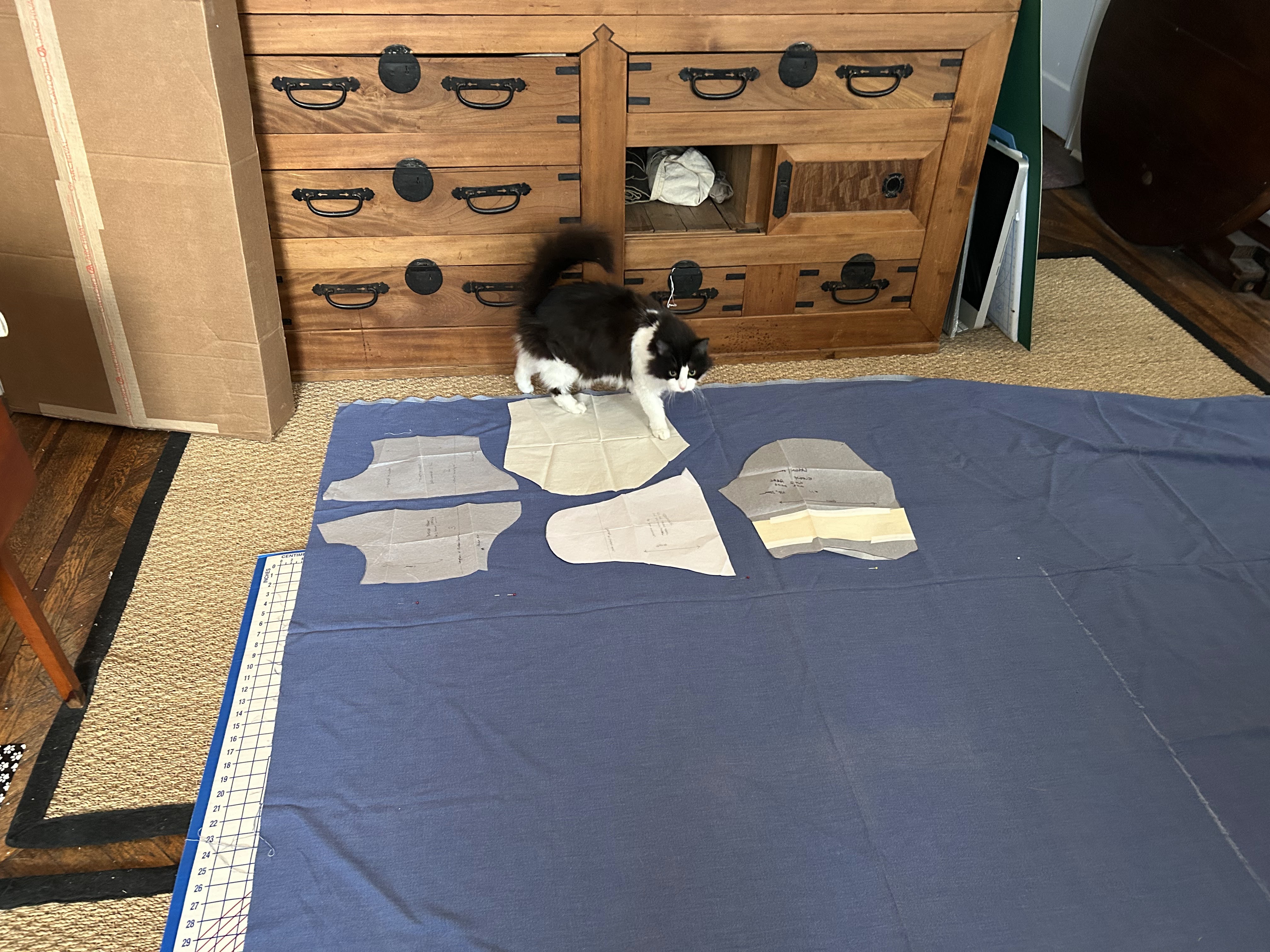
I started on Sunday, September 22, and finished on Sunday, October 6. I have a full-time job and am in graduate school, so I’m not entirely sure how I managed to do schoolwork, work-work, and gown-work but I’m pretty certain the One Weird Trick was to do no housework. It’s embarrassing when the cat’s fluffy tail picks up thread and lint, but it is a reliable measure of how much vacuuming is needed.
The bodice closes in back with a drawstring, which is much the easiest method for me– I did not have time to fuss with the fittings buttons require. The front panel is a gathered rectangle with a band at the top, piped on both the top and bottom edges. A waistband joins the bodice and skirt. The sleeves and skirt were based on shapes I drafted in the Burnley & Trowbridge workshop (I swear I’ll finish that dress). The sleeve has a piped petal cap, which was a pain to make but very gothic, to go with the points that decorate the bodice neck edge, and of which I have no images. Since I had the space at B&T to draft the skirts full-size, they actually work now– astonishing– and make a satisfying conical shape. I’ve struggled with skirts since 2014, and it’s nice to have that solved after a decade!
1820s gown skirt layout
I’ve started using Illustrator to figure out layouts when I am short on fabric. In this case, I only had a little more than 3 yards of fabric, but managed to get what I needed out of what I had. Sure, bigger sleeves would’ve been nice, but I managed long sleeves and that seems like an accomplishment.
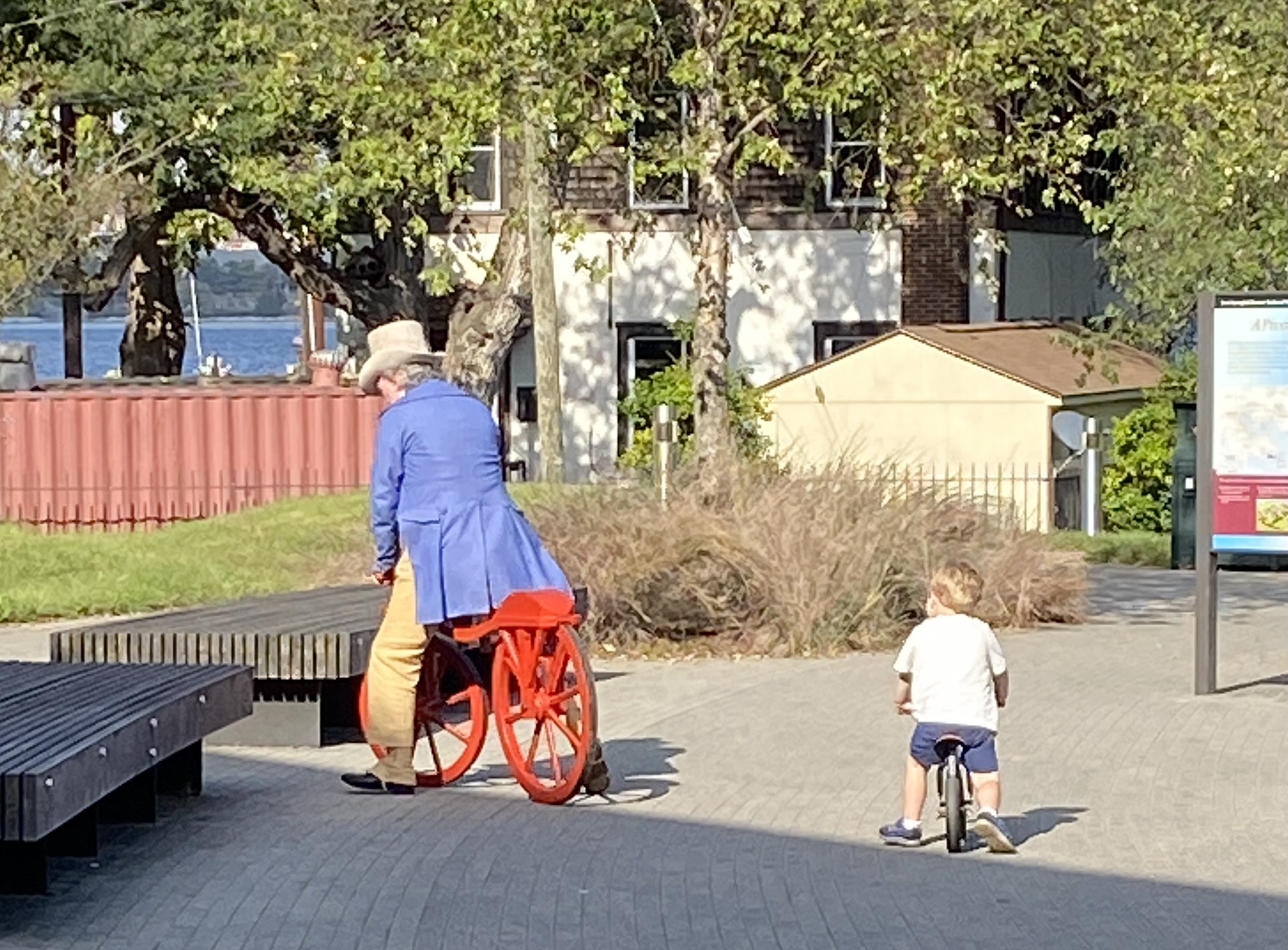
Riding School at Fort McHenry
Mr K. was able to debut his very apt and very dangerous velocipede, another project a decade in the making. We picked it up in February in Williamsburg. It is a handsome and impractical beast, tough to ride, but fun all the same. Charles Willson Peale and his sons had the first velocipede in the States, in Baltimore, so the Fort McHenry “1824” was truly appropriate. We entertained spectators, saw Mr. McC (who also took a turn about the site), and spent the day as very decorative appendages to the Museum’s tents. All in all, a day well spent.












 Kirsten Hammerstrom
You must be logged in to post a comment.