
This was an interesting project that only needed to fit my small mannequin, which was a relief since the ultimate client was in Ohio.
It started with a conversation in the summer of 2022 about 1830s pelisses. I have an interest in the decade because we spend time at Old Sturbridge Village, and it’s a weird time period. I like the way that sleeves get smaller after the crash of 1837, and the various ways you can connect fashion and style to economics and politics. (See American Fancy, by Sumpter Priddy.)
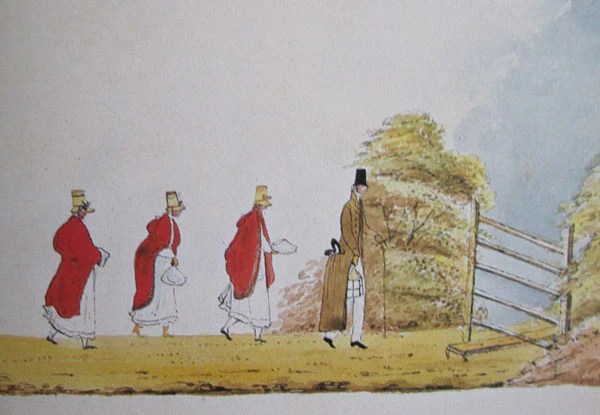
Pelisses were worn in the United States (and Europe) from the 1810s onward, though the bright scarlet wool cloak also persisted in use. The durability and water-resistance of the cloak, and the forgivingly loose fit, recommended them for continued use, Pelisses and cloaks were eventually superseded by sacques, dolmans, paletotes, and shawls, all of which accommodated the larger skirts and crinolines of the 1850s and 1860s. Many of these forms evolve but persist– think of the opera coat of the 1920s through 1960s, with its short sleeves, working over a range of silhouettes from shift dresses to tent dresses to bubble skirts.
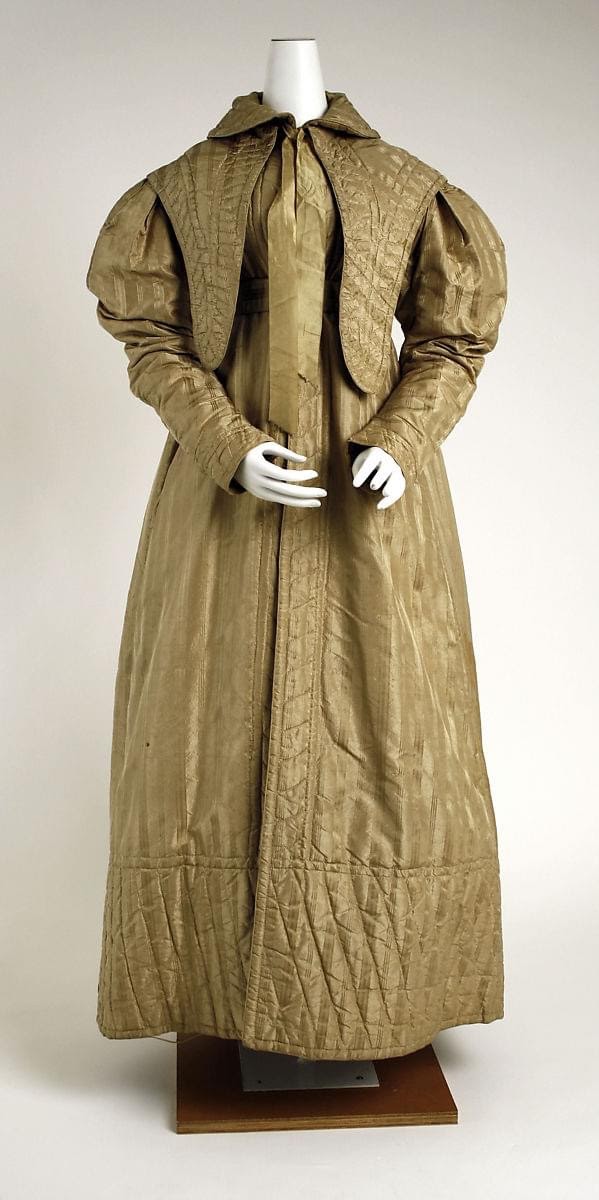

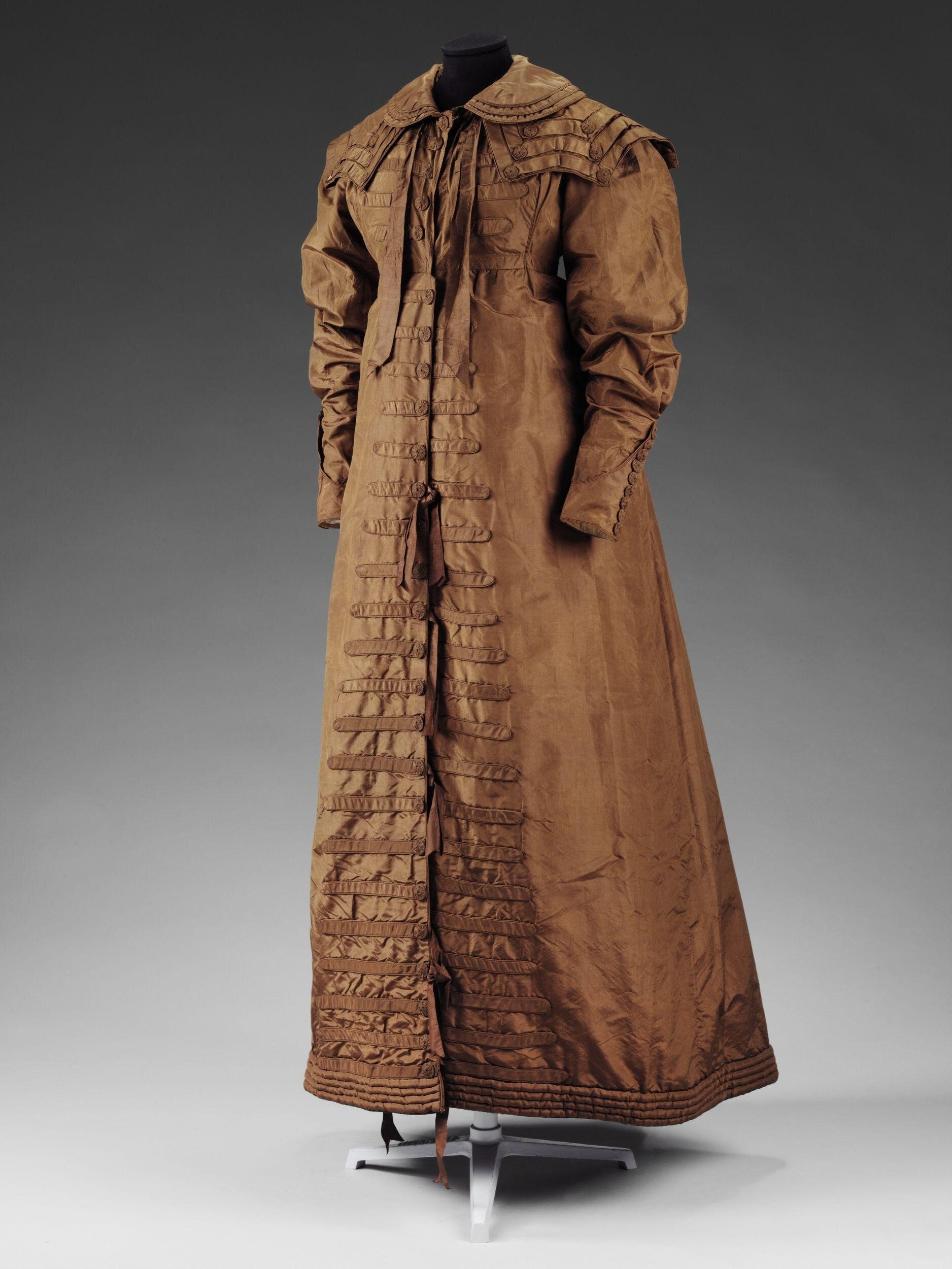
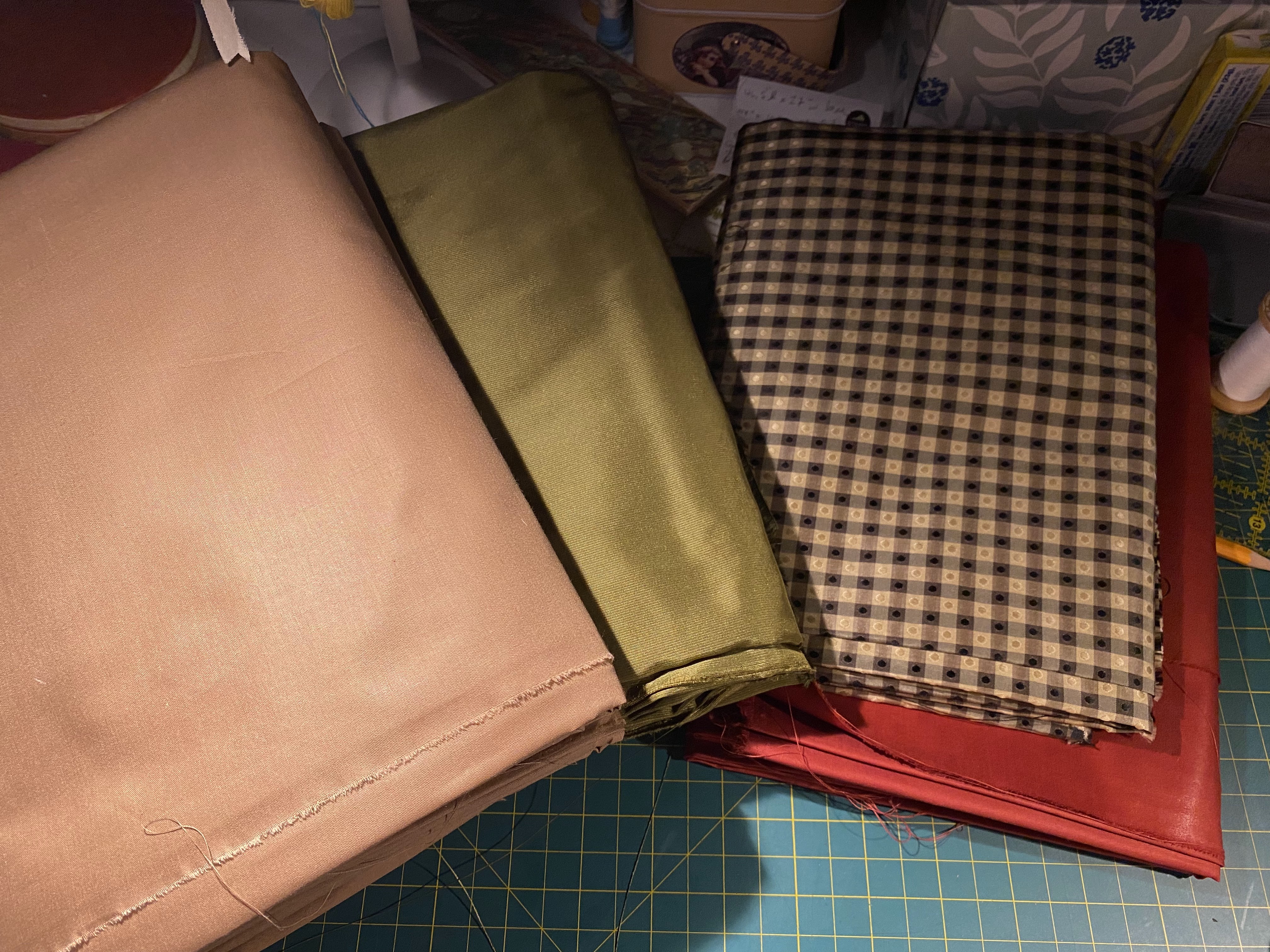
The typical colors seem to have been green or brown, with some stripes appearing as well. For this garment, I selected a range of green-brown silks for the client to choose from and, eventually, we settled on Silk Baron’s Ardennes green silk taffeta and I ordered the yardage. The lining was made of Renaissance Fabric’s polished cotton-poly blend, as the closest material I could find to the polished or glazed cotton linings seen in period garments.


The pattern was scaled down from my own Spencer pattern, and draped to fit the mannequin. The sleeve pattern was a bit of kit-bashing, working between the Past Patterns Lowell Mill Girl’s dress sleeve and my own 1820s sleeve. I chose to err on the side of less enormous, trying to walk a line between fashionable but not too outre. For Boston, I’d make enormous sleeves; for the shore of Lake Erie, northeast of Cleveland, I went a little smaller.

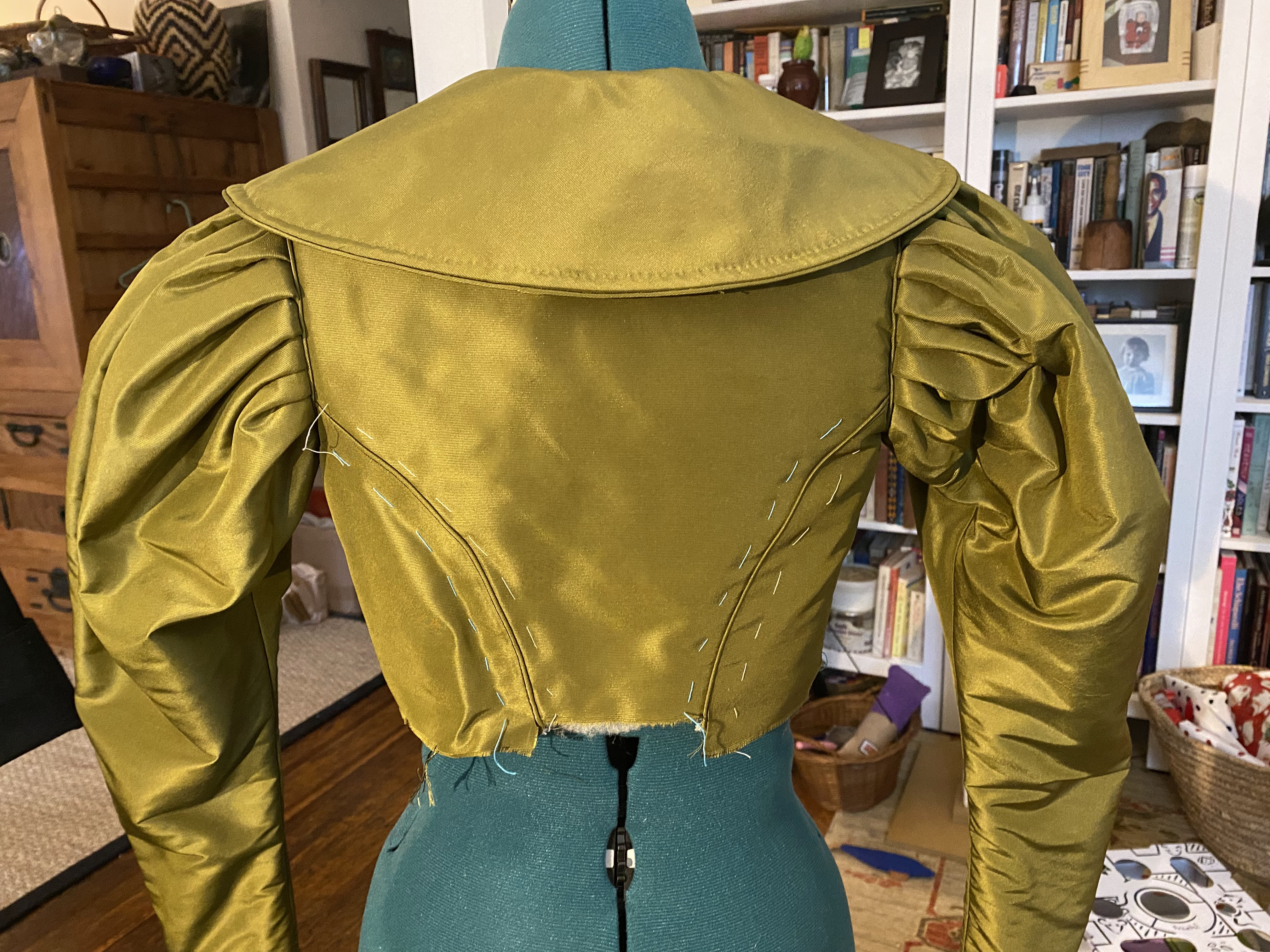
The bodice, sleeves, pelerine, collar, and skirt were all constructed with padded laters of woo batting between the silk exterior and the cotton lining. This was not a fun project to quilt, given the taught weave of both the silk and cotton layers, but the quilting and piping add snazzy details to the edges– and both were typical in pelisses, Spencers, and gowns of the period.
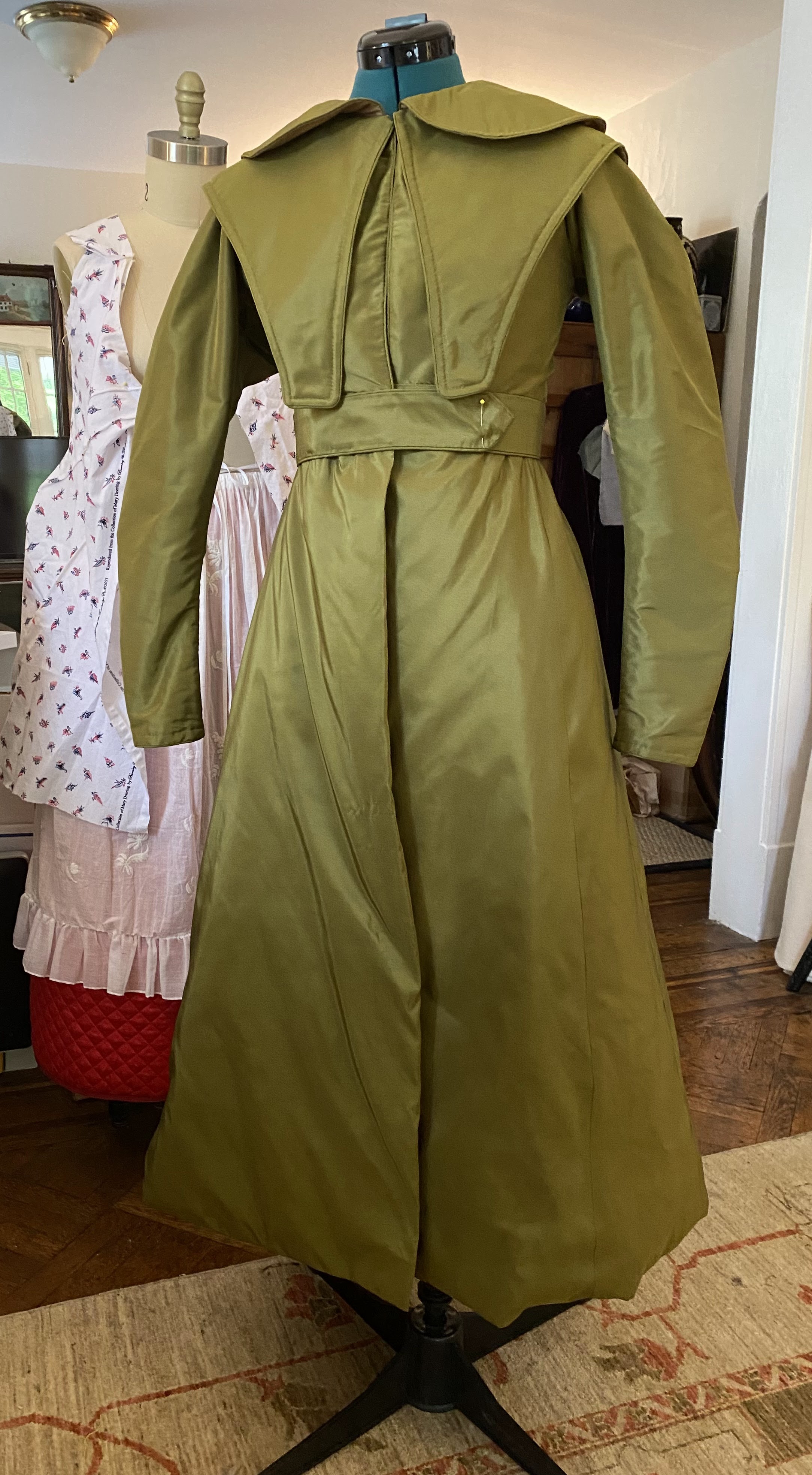
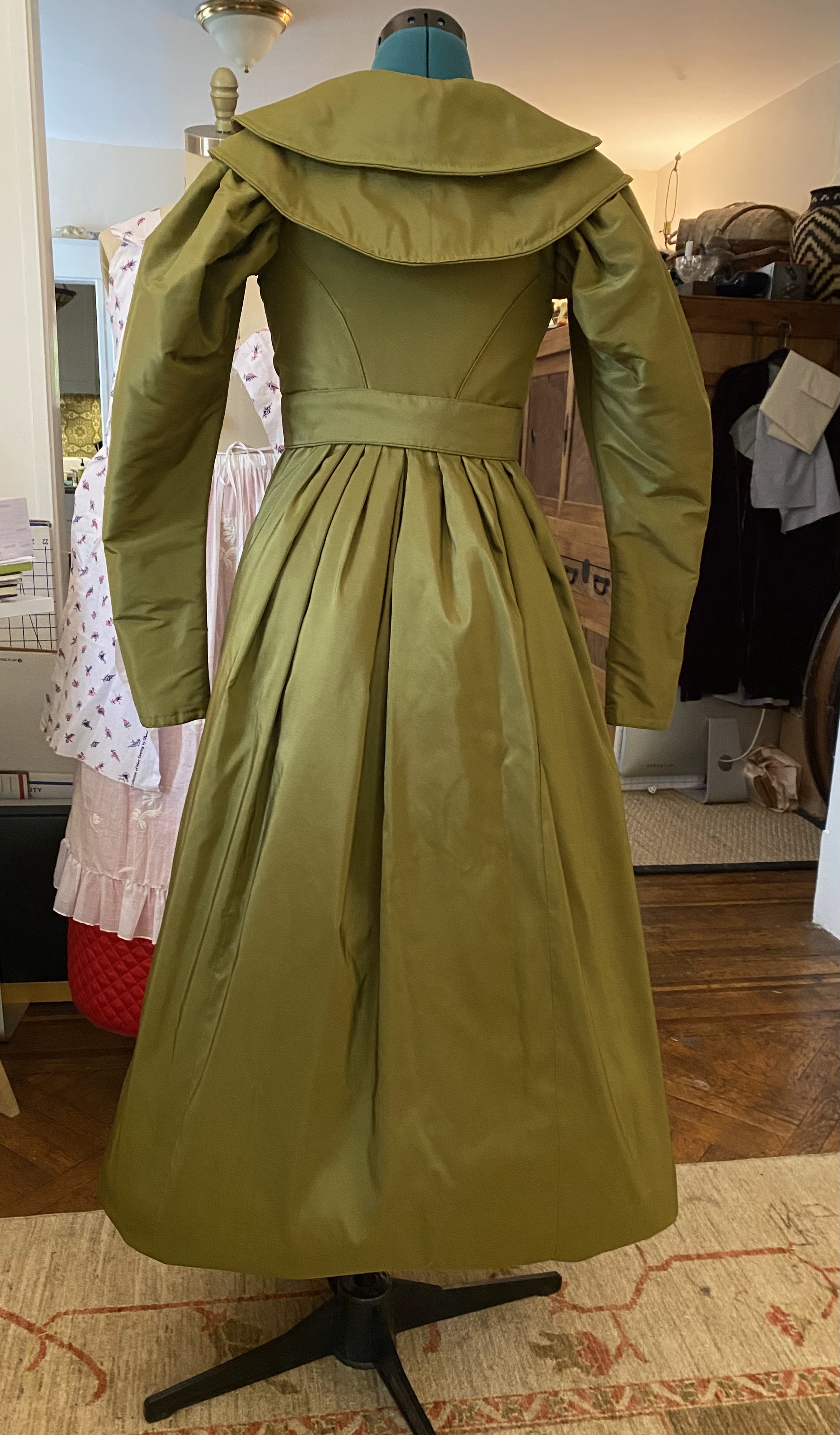
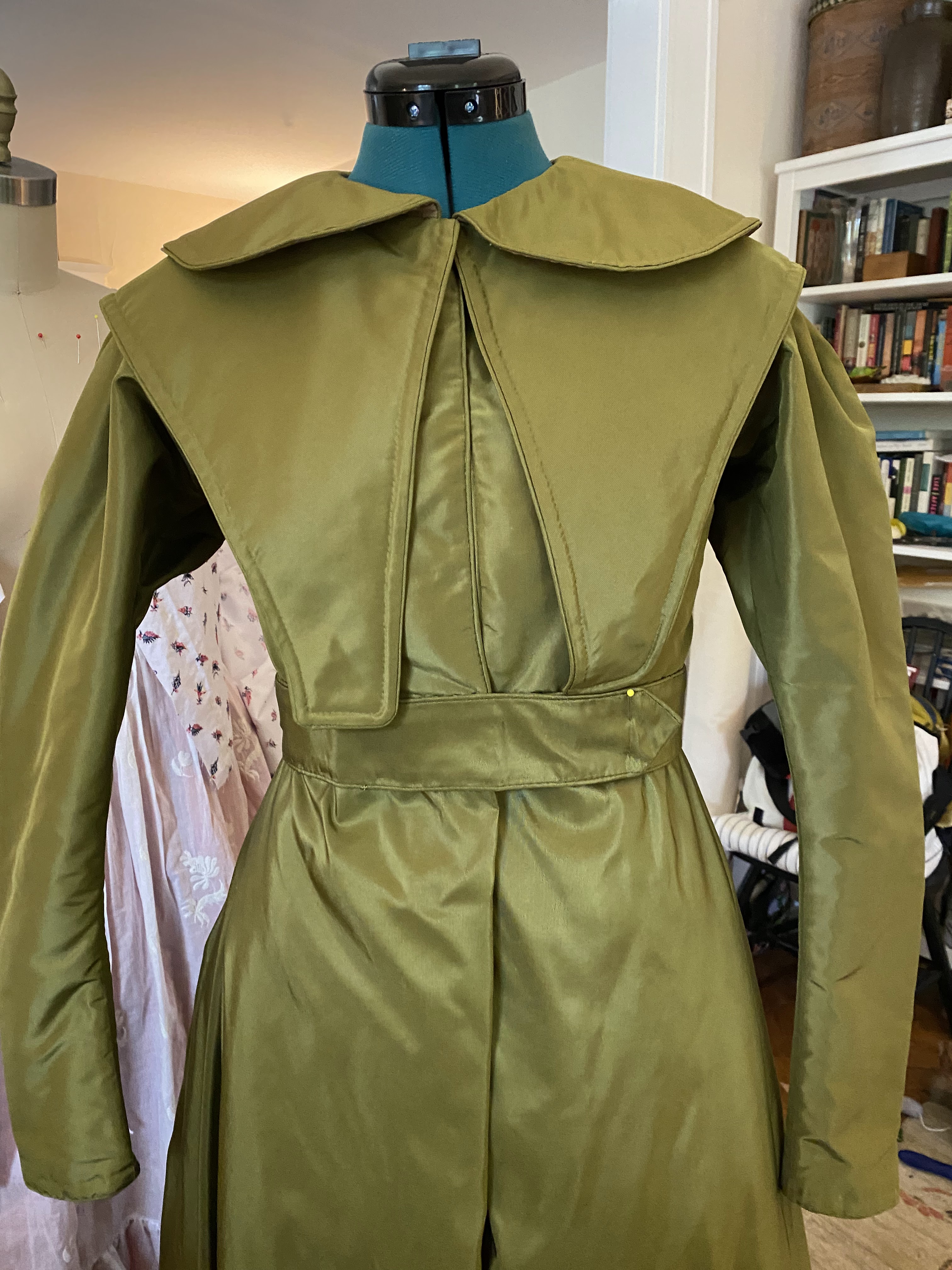
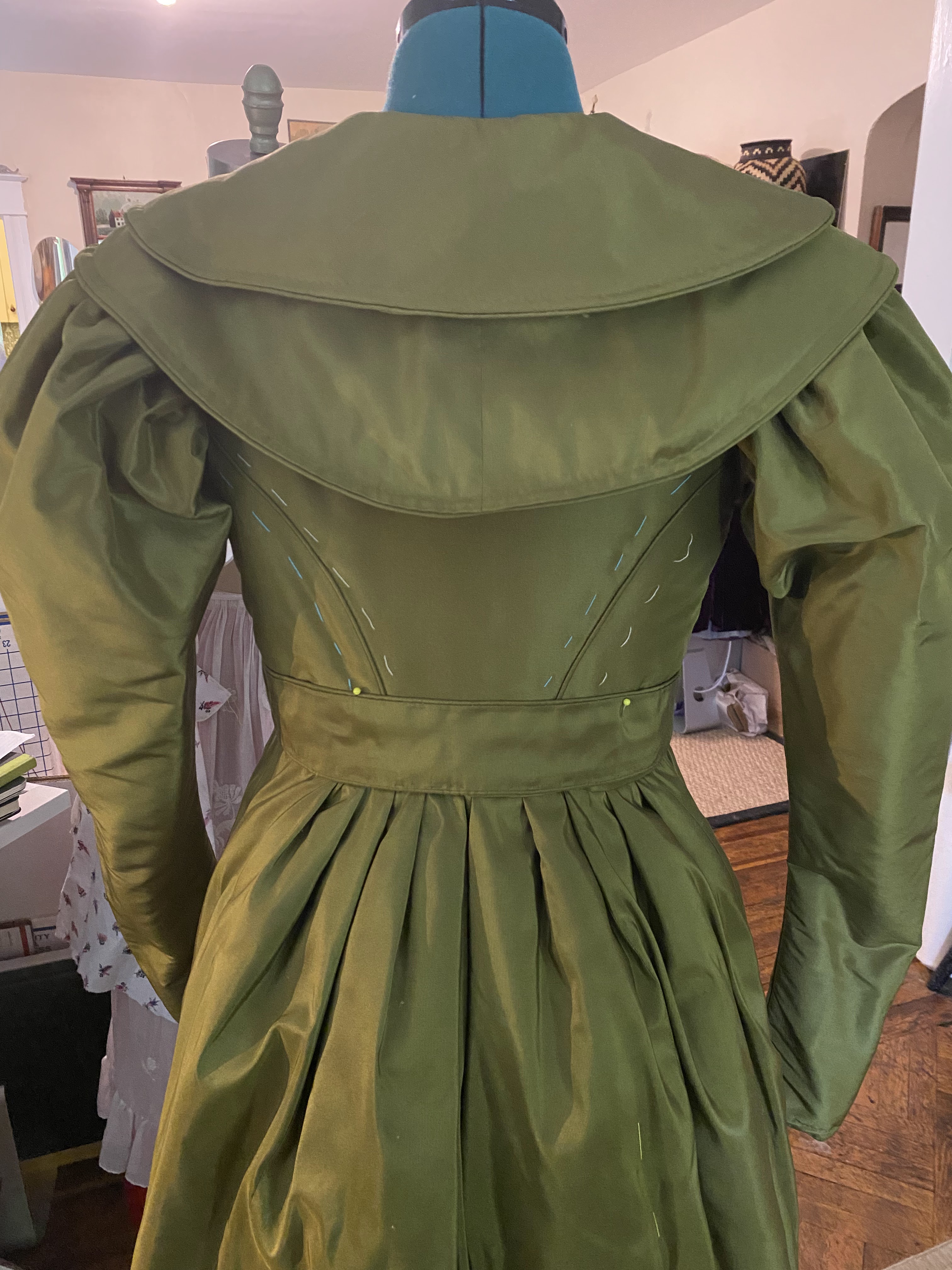
The sleeve puff is achieved in part through tiny pleating inside, a technique copied from the 1820s original gown in my collection, which was handy resource to have on hand, if a bit of splurge.


If I were to make one of these for myself, I would look for a lighter-weight silk taffeta, and I would consider a striped fabric. Some pelisses are less shaped– that is, they’re made more like a bathrobe, without a separate bodice and skirt (see Jane Austen’s pelisse, patterned and recreated by Hilary Davidson), but I prefer the shaped silhouette.







 Kirsten Hammerstrom
You must be logged in to post a comment.