

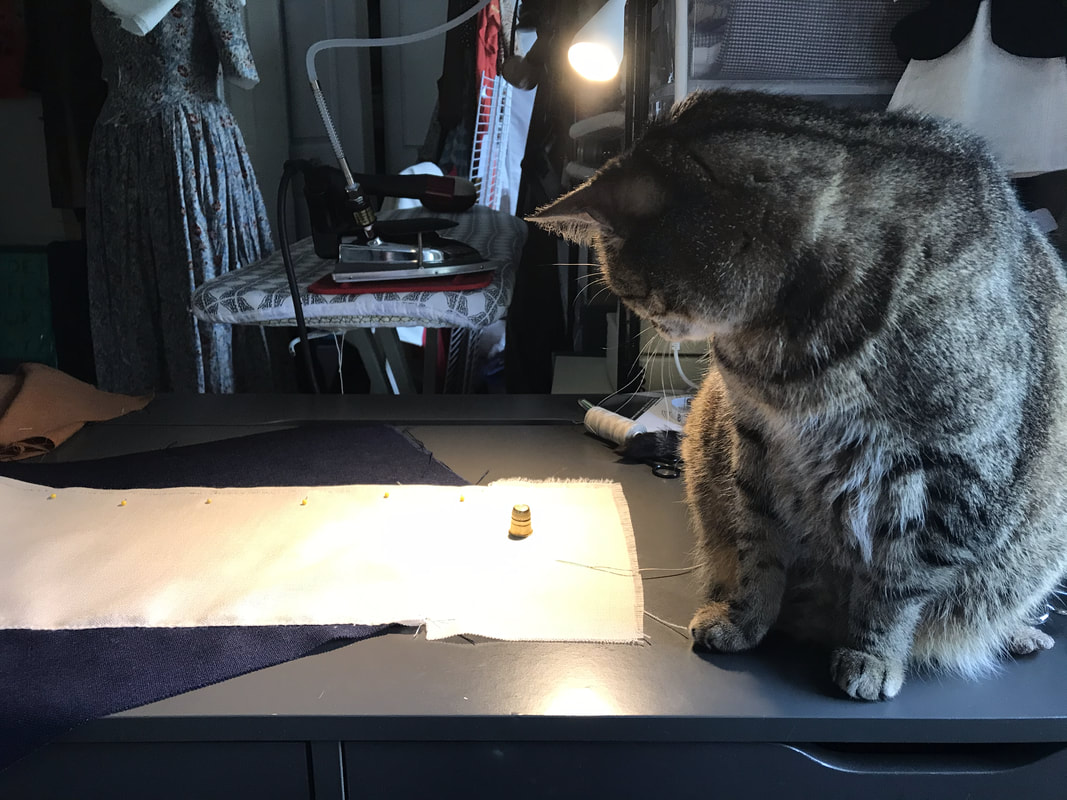
It’s a good thing I get a lot of help and supervision. And that my supervisor, Monty, knows clean paws are important in any undertaking. He has a window seat just to the right of my desk, and here he is preparing himself to lounge while providing close oversight of my work. We’ve spent many hours in this configuration: the sewing isn’t fast, but it isn’t really slow, either. It’s just…there.
I don’t know if 18th century seamstresses and stitchers let their minds wander; you can’t wander too much, or you will make a mistake. But it is meditative work– at least until you reach a change in stage.
After the diagonal quarters are stitched and pressed– the blue triangles with white diagonals– the next step is to attach the white bars that outline these rectangles. This is when it really starts to look like a flag!


Once the bars are attached, they’re trimmed even with the blue and white block. Then it’s time to attach the red bars. With each step, and each new addition to the construction, I took the time to check how the components fit together. I also pressed each seam after it was sewn the first time, and again after it was felled. The loose weave of the bunting will pull as you sew, as the thicker linen thread tugs against the fuzzy wool fibers. I’ve found that since I sew right to left, it helps to tug the thread from left to right as I finish a run of stitches.
The stitching itself is pretty simple: the entire flag is constructed using running stitches, and only running stitches. It’s a fast, simple stitch that does well enough to hold the fabric together, looks neat and even, and creates attractive patterns in the felled/Frenched seams.
The stitching itself is pretty simple: the entire flag is constructed using running stitches, and only running stitches. It’s a fast, simple stitch that does well enough to hold the fabric together, looks neat and even, and creates attractive patterns in the felled/Frenched seams.
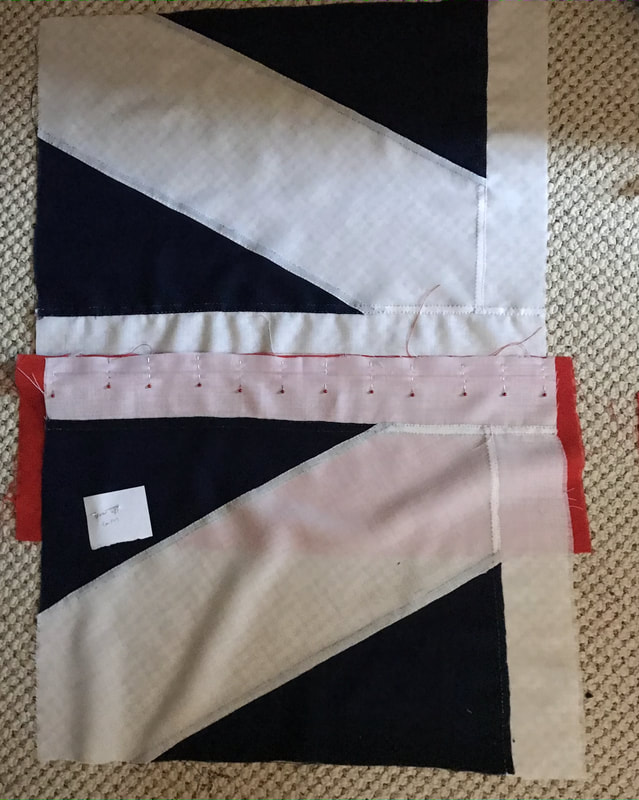

It’s really important to press as you go. That’s true for all sewing projects, but even more so for precision projects. While this flag is large enough to allow for some wiggle room, it needs to go together in order, and make a balanced, pleasing spectacle when it’s finished.
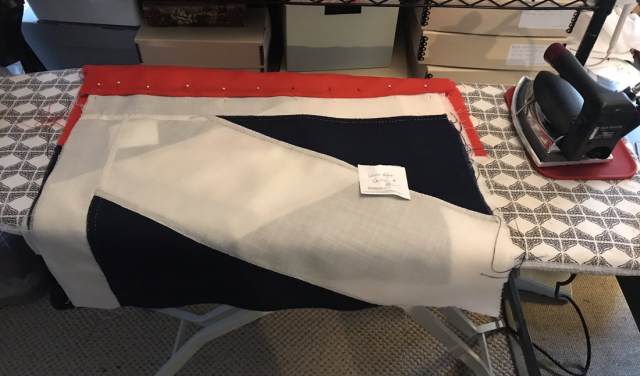
Even though I share the workroom with a collection of historic costumes and various accessories, I have the room for a Hot Steam gravity-fed iron. At 4.5 pounds, it’s a match for the bounciest, most obstreperous fabric. Bunting can be just that fabric. Each of these three colors– the white, the blue, and the red– have their own levels of springiness, with the white being both the fuzziest and the springiest. Pressing makes a big difference in terms of matching edges and smoothing the work.
 Kirsten Hammerstrom