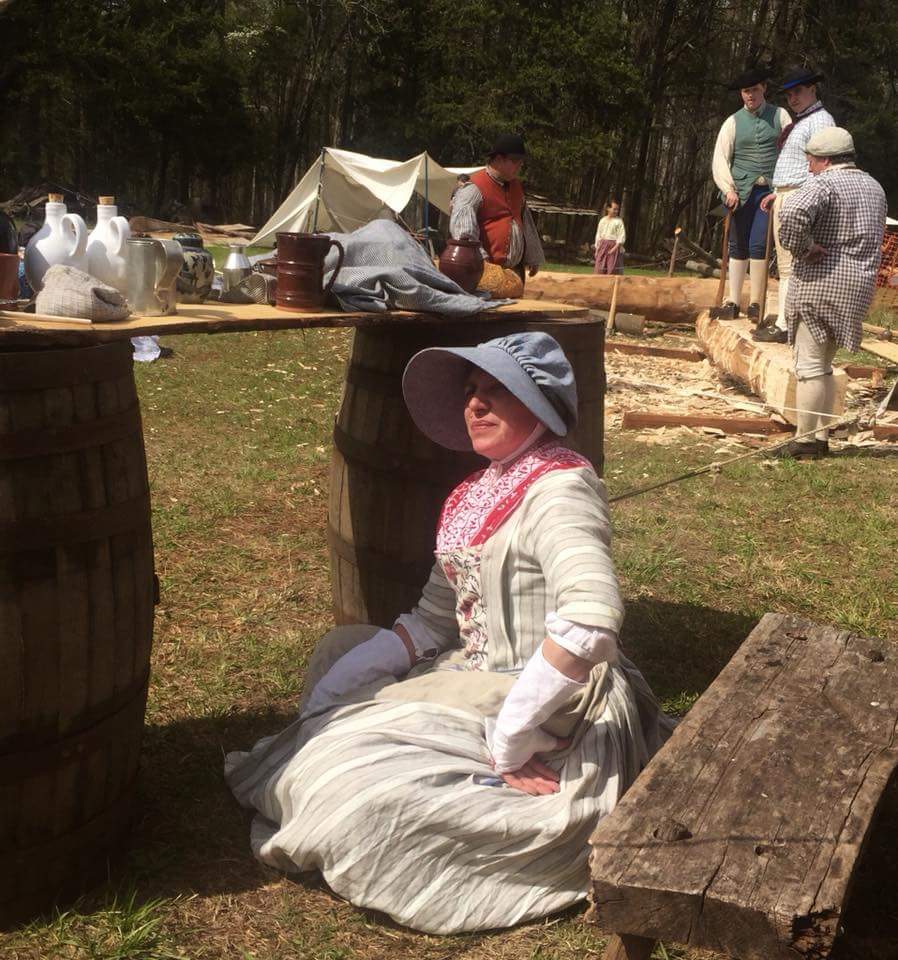
It was a simple set up: two barrels, a board, my frail, and me. (I could really use a wheelbarrow, and a rain deck. At least the rain deck is something I can make myself.) But this was more than adequate to sell luxury goods (rum, whiskey, radishes, and ginger candy) to the soldiers at Fort Dobbs.
I didn’t think it was hot– which may be thanks to that nifty new checked linen shade bonnet– but it was. Have I forgotten how to take care of myself outdoors in warm weather? Perhaps because I’ve spent so much more time lately on winter events, I’ve let the “drink all the water” mantra slide. It’s clearly time to revive the summer skills, with Monmouth not all that far away.
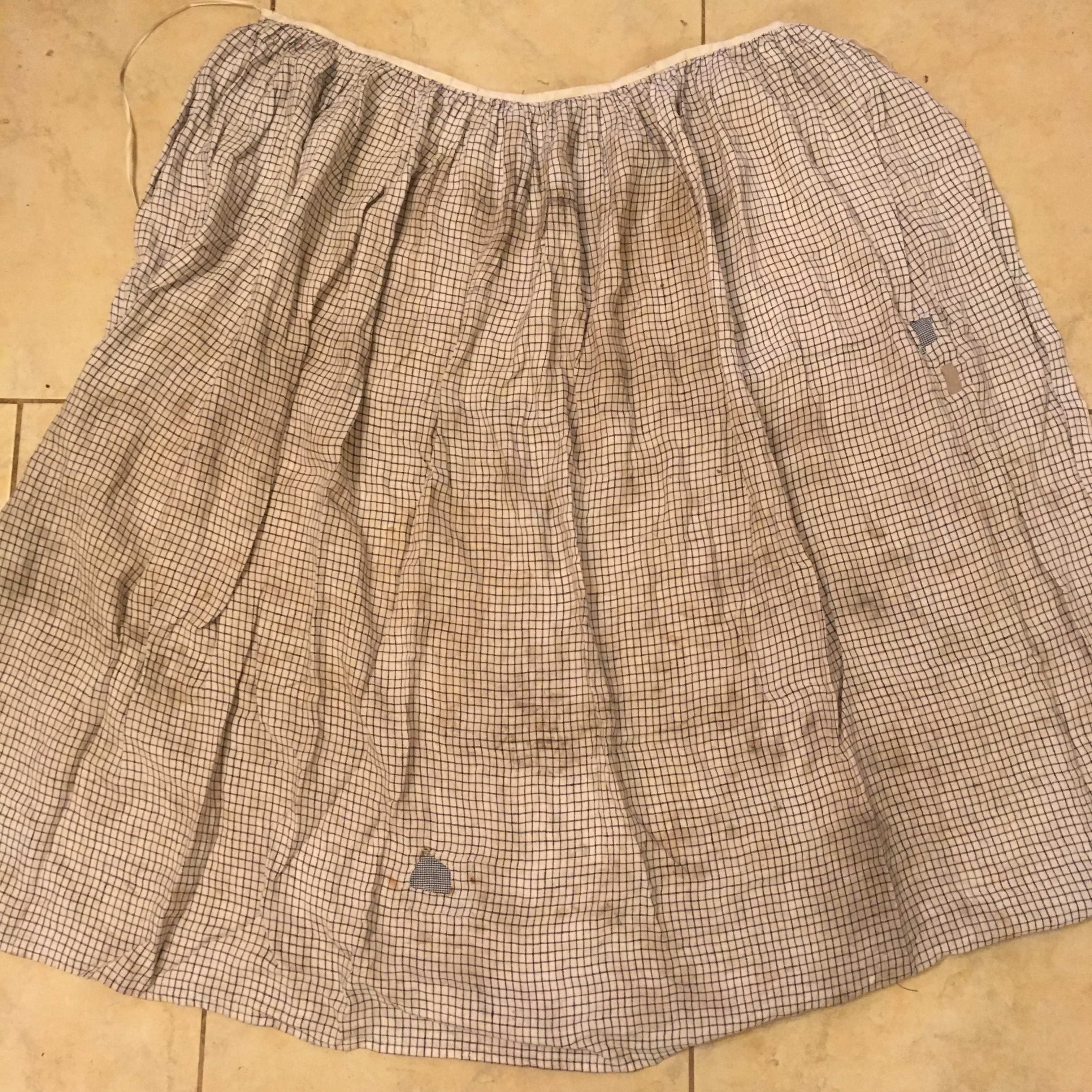
My poor old apron. It’s almost– but not quite– the firstarticle of historical clothing I made. (The first was a shift. Infrastructure and fundamentals, people.) It acquired some new wear (actual holes!) in New Jersey, and required mending.
First, it needed to be washed. I hadn’t taken a objective look at my apron in a while, but after we got home from Salem, I knew I had to mend it, which meant washing.
Reader, it smelled.
You get used to smells, and even enjoy them: wet wool, gunpowder, wood smoke. And then there’s tallow. I’ve never gotten used to the smell of tallow, and I don’t remember when this apron encountered hard fat, but the odor is unmistakable.
So is the water.
This past weekend, I had a chance to mend this favorite apron while I peddled luxury goods at Fort Dobbs’ War for Empire event.
Although I have a sturdy plain linen apron, I’m fond of checks, and of the hand this apron has achieved after much wearing and some washing.
It will never be really clean again, but for now, the apron is mended and back in rotation.
Isn’t she grand? She’s on offer elsewhere; I came across her while narrwing down a date for a very different portrait.
She reminds me of a Tamara de Lempicka, if Tamara and Ammi Phillips had set up easels next to each other. From her forthright, slightly sulky gaze to the exuberant folds of her gown bodice to the hints of style in the details, we can learn a lot from this painting. There’s a kind of provincial Hepplewhite sideboard behind her, set with a colorful garniture; the copper hot water or tea urn places us in a parlor. The painting frame has a shell in the center of the bottom rail, the chair a turned knob on the back upright– we are on the edge of fancy, the moment when neoclassicism really gives way to exuberance (think canary yellow rose-painted china, big puffy sleeves on printed gowns, and fancy-painted chairs).
Below, an earlier entry in the black and white world. This lady was sold at auction recently. She’s earlier than our near-Tamara above, plainer in dress, sulkier. She is certainly more academic, and somewhat better painted, in addition to being set in a vaguely classic scene, in a very neoclassical chair, draped with a fine shawl.The artists is definitely showing off some skill in the “painting transparency” department.
The lady in black is firmly set in the neoclassical period. Restraint and moderation are watchwords– despite what you may think of that hair, which is recalling Greco-Roman precedents–much the way certain factions in the Revolutionary period were driven by piety and discipline. Politics and national ethos or mood are embedded visual culture then as now, and even in these portraits, simple as they seem.
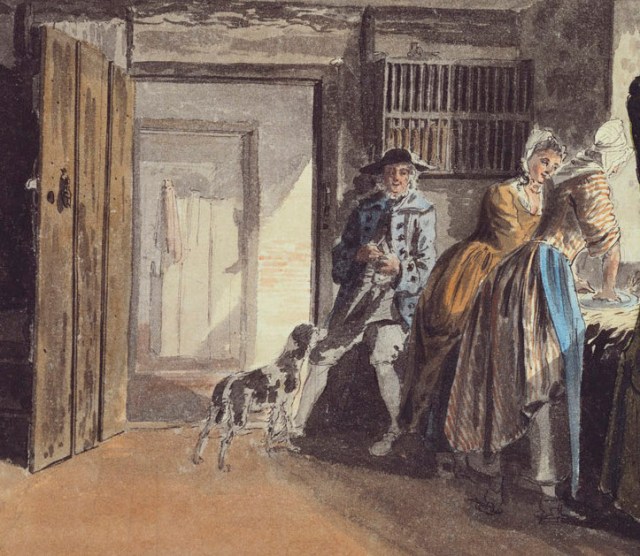
The Kitchen at Sandpit Gate (detail). Watercolor on paper by Paul Sandby 1754. Royal Collection Trust, RCIN 914331
The best times are always those when we are the least self-conscious– not that we can necessarily choose those times. Often they simply happen to us, but if we are lucky enough, we will notice, or someone else will record those moments for us. Last weekend, without even meaning to, we came as close as I may ever hope to get to recreating Sandby images of the Sandpit Gate kitchen.
Mistress F commanded the kitchen: I served as her reasonably able scullion, and, with assistance from Drunk Tailor and the company of the B’s, we managed to produce enough food for several dozen people.
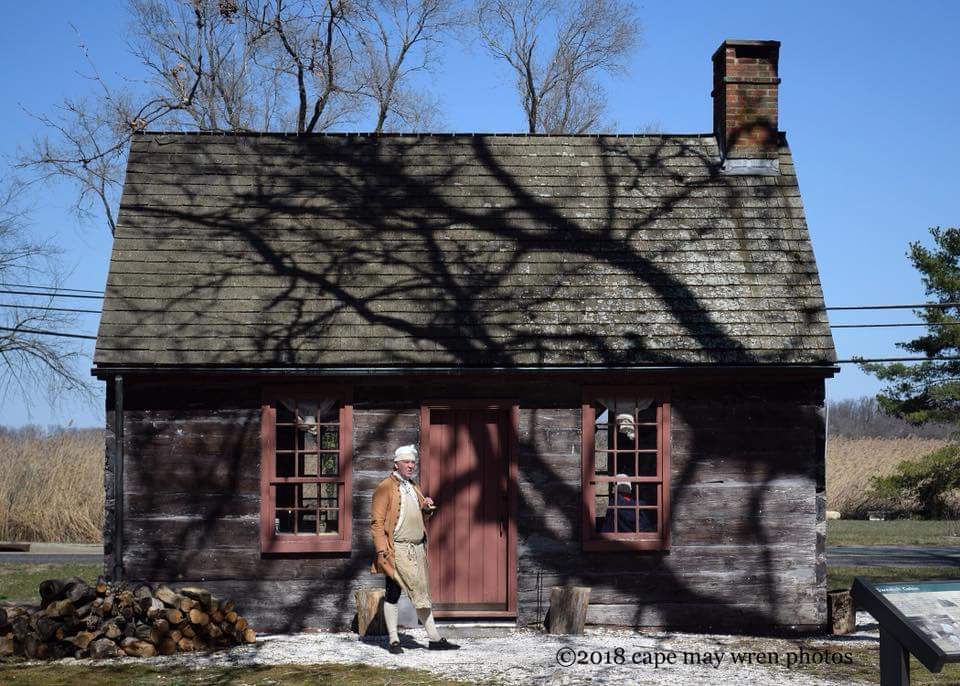
(I baked the pound cake at home, but the egg and onion pies were made on site. I lack historically correct baking apparatus aside from one pie plate.) Cooking in the cabin at Hancock House reminded me of good times long ago— and not so long ago–and how much I enjoyed throwing refuse out a window, and using a soapstone sink. The weekend also brought to mind “show, don’t tell” as it applies to interpretation, and made me think again about how to create more immersive educational experiences for visitors, without becoming ritualistic.
There’s not much time to think those esoteric, grad-school-seminar thoughts when you’re in the midst of cooking, and that can actually be a relief. Instead, better to think of the light, and the landscape, and the time remaining until a pie is cooked through.
At Sandpit Gate circa 1752. Royal Collection Trust, RCIN 914328
The landscape and the light: redemptive, all that space, the blue sky and the grasses. I thought of The Witch of Blackbird Pond, which I haven’t read in decades, for in some ways, the coast of New Jersey resembles the coast of Connecticut. It’s one of the first historical novels I remember reading– it is probably one reason I have ended up doing the work I do, and spending as much time as I did in New England. (You can read it here.) It’s not brilliant literature, and it was nearly two decades old when I read it, but it was certainly memorable.









 Kirsten Hammerstrom
You must be logged in to post a comment.