
 Most readers know that I have a fairly extensive museum background: my entire working life has been spent in museums. Over twenty-six years (right outta school, folks–this is the only life I’ve ever known), I worked my way up from Curatorial Assistant to Director of Collections. I’ve seen a fair number of museum directors and museum crises (deaccessioning, anyone? financial retrenchment? sexual harassment suits and countersuits?), I’ve hired and fired people, managed some large and rewarding projects, and met some amazing donors, researchers, and colleagues.
I still remember when I was front-line staff in the research collection, when you were on the phone 75 times a day, when patrons would walk in, stamp their feet and declare, “My taxes pay your salary! You have to do what I want!” Guess what? We didn’t, and that four cents didn’t go as far as you think.
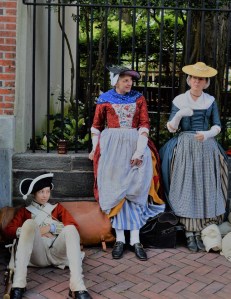
When I see commentary on FB about the unionization at Plimoth Plantation, and read comments by people stating that until someone can PROVE that the director is making six figures and that the workers are TRULY in danger, they cannot support the unionization of workers because, well, the workers signed up for the poor pay; they knew what they were getting into; and it’s a MUSEUM, so it’s special, I wonder what those commenters are thinking, and what their work lives have been like.

Organizing a union is not an easy thing, so do not imagine that the workers at Plimoth rushed into this willy-nilly like they were voting for prom king and queen. It takes months of effort to canvas employees– work that must be done off-site and after working hours– to talk to them about working conditions and the benefit of union protection. Union reps go with employees who act as the ambassador, and on-site relationships can be testy when the person you thought was your friend and ally resists or resents your unionization effort. I know, because I’ve done it. In 1993-1995, the Missouri Historical Society went through an attempt to form a union that ultimately failed at the ballot box.
One moment that will always stick with me came after the union drive failed. During the drive, an employee in Development argued with me that she didn’t need a union to protect her; her boss was nice. I pointed out that her boss wasn’t always going to be there; staff changes, and to have happy employment at the whim of one person was risky: a union offered protection from change at the whim of the director or your immediate supervisor. She was one of the “No” votes. Some months later, after her boss had been let go suddenly, and replaced by a more demanding woman with far less tolerance and far more quirks (and the original boss had been no peach), she approached me at a staff meeting. “You were right,” she said. “I see that now.”
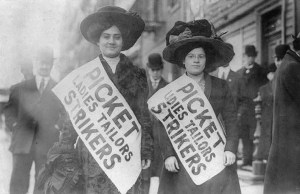
There are two lessons in that experience: one, that it’s hard to imagine another person’s situation unless you’ve lived it, and two, that humans are bad at imagining, anticipating, or preparing for change (except those of us with anxiety disorders, who plan multiple responses to any situation). Unions help workers by setting rules that protect them from change, and by having input into things like, oh, HR manuals, where the worst case is that every policy statement ends with, “Or at the discretion of the director.” As much as museums need directors’ “vision” and leadership, museum employees often need protection as they try to implement those visions.**

Here’s the thing: on the 2015 Form 990 filed by Plimoth Plantation, the Executive Director’s salary is listed as $142,896*. Costumed interpreters are seasonal, often paid minimum wage ($11 in MA right now), and contribute directly to the museum visitors’ experience. Yes, the Director is responsible for raising funds, maintaining happy donors, and has overall responsibility for the museum’s success. Let’s say, realistically, the Director works 60 hours a week. For the 2015 tax year, that was $45 an hour. (For a 40 hour week, the base “wage” would be $68/hour.) Should a director earn 4 or 6 times what front line staff earn? I suppose it’s better than the difference that exists in for-profit entities, but why are the interpreters paid so little? What about Colonial Williamsburg, another place where wages are low and expectations high? What about at the New-York Historical Society, where an archivist can make less annually than in a similar position in a similar organization in much lower cost-of-living Rhode Island?

When a museum pays its director six times what front line staff are paid, what does that tell us about its priorities? Does that imply that the director is more valuable to visitor experience than the interpreters, maintenance workers, and craftspeople? When was the last time the director spent a day over a fire, graciously fielding “gotcha” questions and recreating the past to inform the public? I’ll grant you the director probably does have days when she can’t pee for hours because she’s stuck in a meeting with droning donors, or on endless, useless, frustrating conference calls. And I further understand that the director bears the final responsibility for the museum’s financial health and visitor experience, but when was the last time a director got canned when a guest complained (reasonably or not)?
Why have we decided that museums get a pass? Why have we decided that the work is worth our (or others’) personal sacrifice? Why do we persist in making those excuses, even though we know MPA and MBAs are running museums using the tools and precepts of peak capitalism?
*You need an account, but I highly recommend searching Guidestar before you apply for a job with any 501(c)3. Form 990s (the non-profit annual filing form with the IRS) give you great snapshots of financial health– and an idea of what the top dogs make, and how an organization’s finances have changed over time. I never apply for a job without checking the financials.
** More on this another time– both HR policies and the “visions” of various directors.




 Those are hard to unpack: how will other people remember us? Often, we have no idea what we mean to other people, even the ones closest to us. It’s easier for me to know what I would take or keep to remember someone else by– a single sleeve link; a wooden train engine; a stainless steel spoon; a necklace of handmade beads. None of those things reflects what is truly meaningful to me about them, that is, without my knowledge, these aren’t particularly interesting or aesthetic objects. What makes them special is the story I attach to them.
 Kirsten Hammerstrom
You must be logged in to post a comment.