History Hurts

We have been here before: terrible stays, stays in need of minor mods, and “it isn’t history till it hurts.” New this past weekend was the Busk Bust Blister (Bursting) which didn’t make History hurt, but sure did bring a sting to the wind-down afterwards.


These new stays are, so far, the best I’ve ever had and well worth the blood, sweat and swears it took to make them. Gowns do seem to fit better over these stays; they held up well at muggy Monmouth and in polar Princeton, but the last two rounds at Ti left me feeling like I’d taken a hoof to the ribs.

What gives, kidneys? At least this time I made it past Fort Ann and all the way into a private room in Glens Falls before I had to free the sisters and release the lower back.

IMG_7298

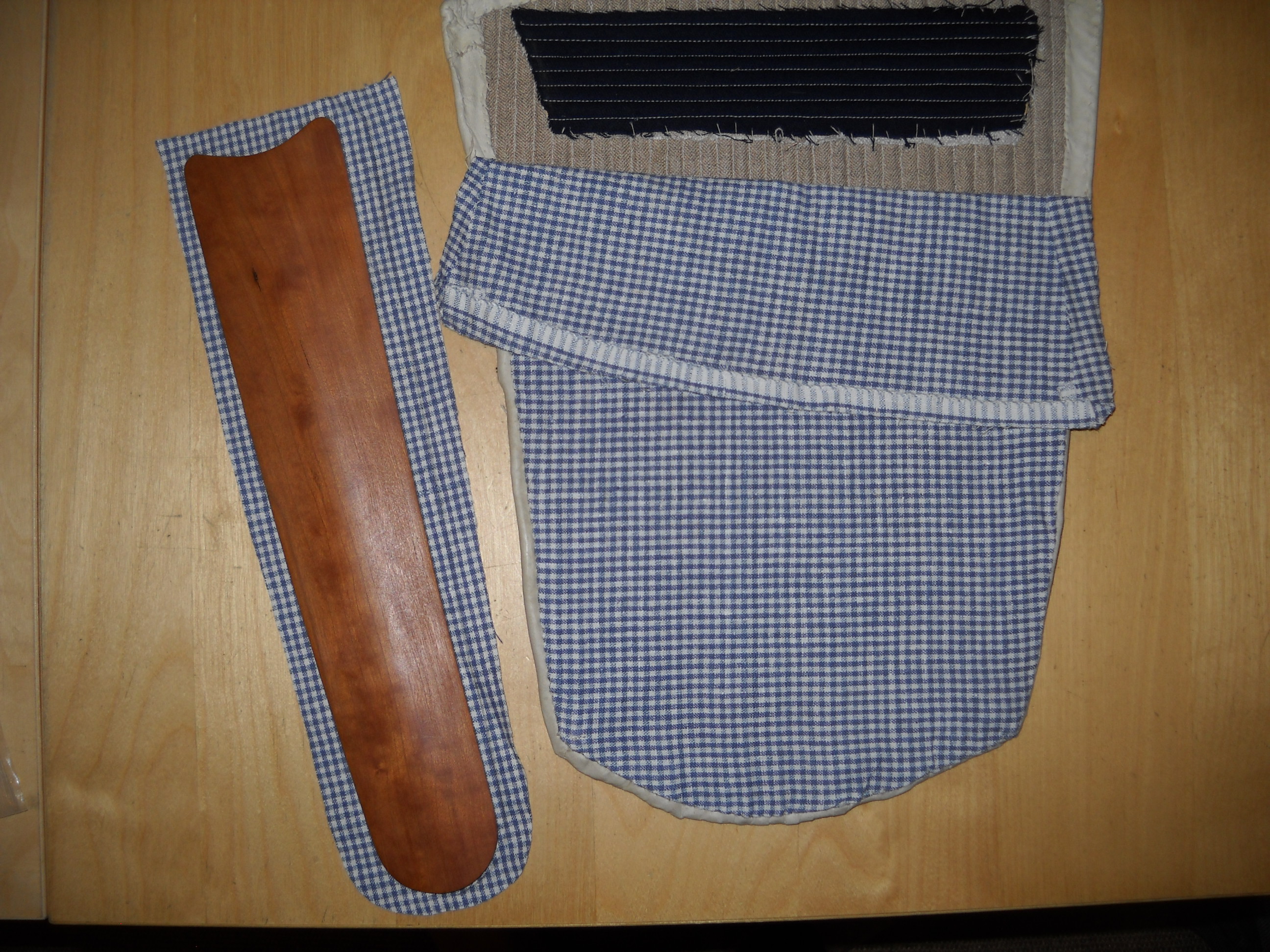
But this time, there was a bonus: the previously indicated Bust Blister. On the left side (I’m right handed), I developed a fairly robust .25” x .125” blister that crowned the top of a nearly 2” red mark, mirrored on the right by a less red and slightly less long mark. The culprit?

The Busk of Doom, of course.
 

dscn4568

Strictly speaking, I should not sport a busk when I desport as Captain Delaplace’s serving woman, or as a refugee cooking up the last of the bread, eggs, and milk. I’ve earned these marks and (potential) future scars by dressing above my station, and need to adjust accordingly.

Step one: Rounding down the busk edges (now in the capable hands of Drunk Tailor).
Step two: Foregoing the busk when working.
Step three: Wearing partially-boned stays when working.

Two is the easiest; three is the hardest. Which do you think I am, therefore, actually contemplating as a necessary next step?

But of Course: Step Three, Pathway to Finger Cracks and Stained Stays.
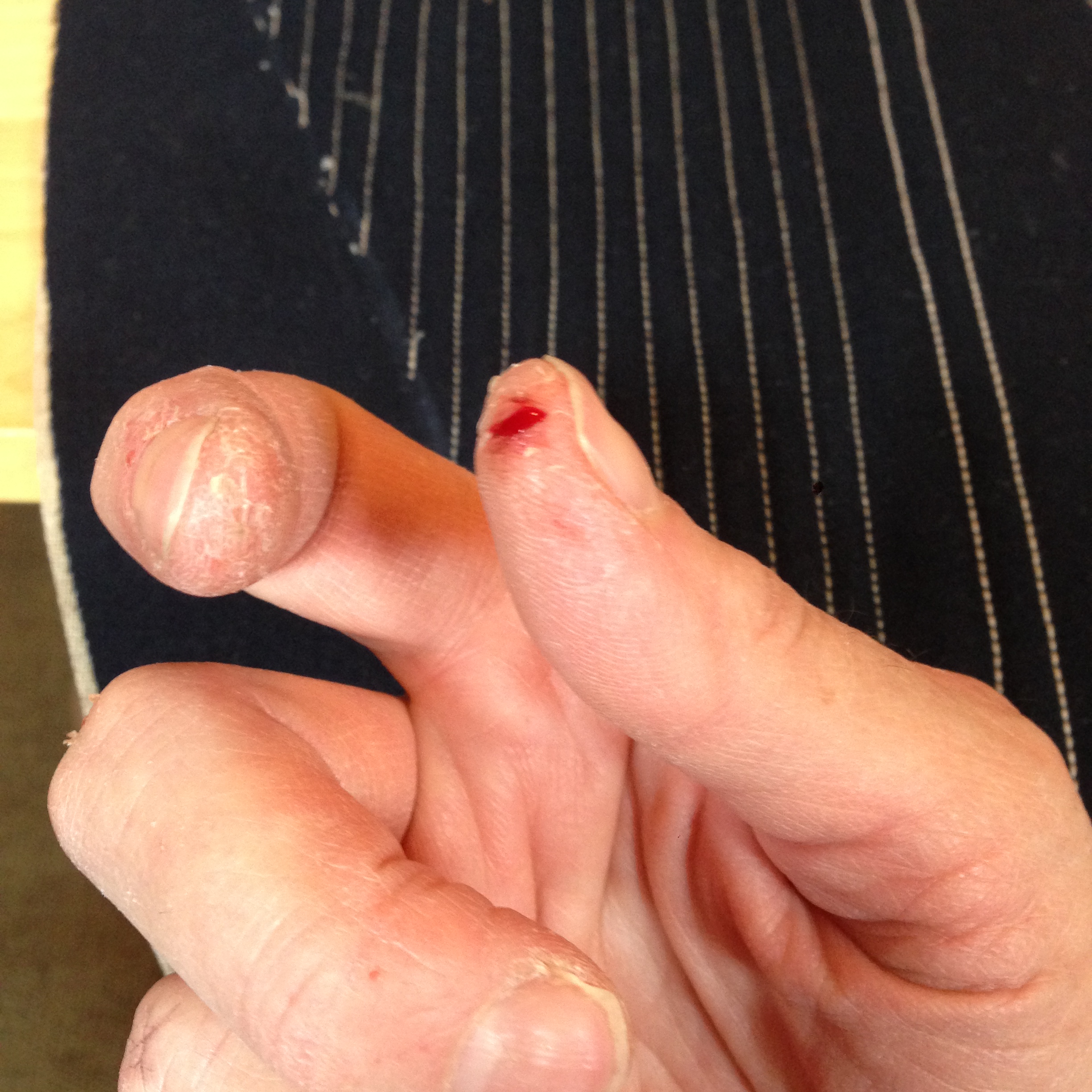
d'oh! surgical tape made this *much* better later.
d’oh! surgical tape made this *much* better later.

Fortunately I have people close to me who will ensure that I work through steps One and Two before embarking upon step Three, but I certainly want to know more about (and will look much more closely at images of) working women in the third quarter of the 18th century. My suspicion is that women who are performing labor that requires movement– up and down before a fire, back and forth across a floor, bending over a tub– may not be wearing stays made in exactly the way high style stays are made for ladies who bend over an embroidery hoop, glide back and forth across a ballroom floor, or move up and down the stairs of a well-built home they supervise.

Or my busk pocket is too big, my busk edges too square, and my actions too fast and continuous.

Paul Sandby. At Sandpit Gate circa 1752 Pencil, pen and ink and watercolor. RCIN 914329
Paul Sandby. At Sandpit Gate circa 1752
Pencil, pen and ink and watercolor. RCIN 914329

What are these women wearing? They certainly look fully boned. What can I change to make my stays work better for working? No matter what, where there are variables, there are experiments to run, and that’s what really makes history fun (even when it hurts).

Workshop Wednesday: Accessory to the Past in June!

Neck stocks: just so.

Drunk Tailor and I will be up to more mischief this summer, and you can join us! We’re teaching a class this June at Historic Eastfield Village. Among the things you can learn to make are chemisettes, reticules, gaiters and neck stocks.

We plan to start with the basic question: who are you? And what does that mean for what you wear? What visual and extant sources can inform your choices? From John Lewis Krimmel to Sophie Du Pont, images help paint a picture of a distinctive early American style.

Mrs Pabodie attempts to remember when she was born (1771). Photo by J. D. Kay

Collections from Rhode Island to New York contain examples of early garments that help us understand how people dressed in the early 19th century, as well as diaries that tell us how they lived. Fortune telling? Sewing for money? Bored with quilting? Church as a social experience? There’s much more to the early nineteenth century than Jane Austen. Come find out more this June.

Serving Delaplace

dscn4628

With 400 miles between us, Drunk Tailor and I have few chances to explore the past together, so I was both delighted and nervous when he agreed to join the British Garrison 1775 event at Fort Ticonderoga as one of Captain Delaplace’s servants.  Even better, we were also joined by the itinerant Deep North Yankee who wandered around the Fort (possibly seeking roofing shingles, of which he is much in need).

dscn4631

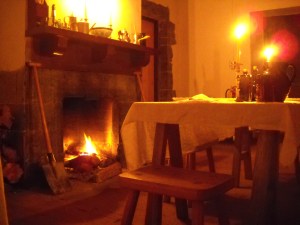
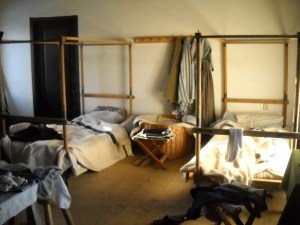
Friday nights are always magical, candle and firelight (and only the warmth of the fire) as we drink cider and talk about history. But morning always comes: Saturday, cold and clear, Mr S and I woke and blinked across the room at each other, and I wondered to what degree I really wanted to ever crawl out of bed…only hunger and an eventual need to pee (and fear of a Sergeant) propelled me.

Yup, you cook 'em on a board.
Yup, you cook ’em on a board.

First order of business: breakfast. Mr S, supplied with his corn meal of choice, made us johnnycakes, which provided perhaps more interpretive than nutritive value. Still, they were warm and tasty and he is the only person I know who can make them; my efforts end up as FEMA disaster sites.

Captain Delaplace’s servants were tasked with cooking for his mess, so Mr S and I got a start. We had a chicken, an onion (I traded onion # 2 for some bacon), butter, carrots, potatoes, a butternut squash, salt, and some port. I don’t know where this English serving woman of 1775 encountered mis en place, but she accidentally introduced coq au vin to the Captain’s table with the dinner meal.

Captain and Mrs Delaplace dining, manservant in attendance

The Captain and his Lady dined on chicken braised in butter and bacon with root vegetables in a port sauce; we servants waited until they were done before we could eat. (Confession: I need to eat a lot, and have a sensory overload problem, so when visitors fully crowded the room, I had to dash across the parade ground for a Clif Bar and an Ativan before I could continue to wait for my dinner.) In the afternoon, dishes were washed at the table, as was common (at least in early New England), dried, and set away, while the Captain’s lady and child played in the cabbage patch between the beds.

dscn4657

When the room was empty, servants were able to eat (huzzay!) and found the meal very tasty indeed. I would certainly make this again, and learned more about cooking– a typically female task I generally try to avoid– than I had expected to. Then we had yet another round of dishes before it was time to tidy the room and make ready for tea or supper.

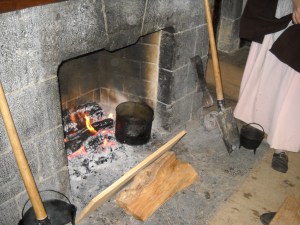
To that end, we cleared the table and broke it apart to reveal the floor and hearth, which needed to be swept of bread crumbs, squash peels, dead leaves, and other detritus. The best way to sweep an unfinished floor in the 18th century (per Hannah Glasse et al) is to strew the floor with wet sand and then sweep. I mixed sand with lavender-infused vinegar and threw it on the floor; this keeps the dust down as you sweep months of dust and dirt out of the corners and from behind tables and chests.

The trick is to sweep in one direction (more or less) from the back of the room to the front, and then to gather up the sand (here in a shovel) and pitch it off the landing. Much was thrown out the door and over the stair rail, just as servants would have done in 1775. (And I am told it is soothing to nearly hit the sergeant, but perhaps that’s merely hearsay, if not heresy.)

img_9478

When we were done, we restored the table (Drunk Tailor noticed the height of the ceiling, and wondered about hanging birds in cages whist awaiting the return of the tabletop), fully reset with cloth, candlesticks, plates, and knives, ready for the supper we didn’t cook, as we skipped away at the close of the day to find our own meal in Glens Falls, where live music is inescapable on a Saturday night.

Serving Delaplace

(function(jQuery) {
function init() { wSlideshow.render({elementID:”312571667456174901″,nav:”thumbnails”,navLocation:”bottom”,captionLocation:”bottom”,transition:”fade”,autoplay:”0″,speed:”5″,aspectRatio:”auto”,showControls:”true”,randomStart:”false”,images:[{“url”:”1/6/2/6/16261628/dscn4627.jpg”,”width”:”400″,”height”:”300″},{“url”:”1/6/2/6/16261628/dscn4642_1.jpg”,”width”:”400″,”height”:”533″},{“url”:”1/6/2/6/16261628/screenshot-2017-03-14-09-37-00.png”,”width”:”400″,”height”:”399″},{“url”:”1/6/2/6/16261628/img-20170218-110626.jpg”,”width”:”400″,”height”:”300″},{“url”:”1/6/2/6/16261628/dscn4644.jpg”,”width”:”400″,”height”:”300″},{“url”:”1/6/2/6/16261628/dscn4650.jpg”,”width”:”400″,”height”:”533″},{“url”:”1/6/2/6/16261628/img-9466.jpg”,”width”:”400″,”height”:”300″},{“url”:”1/6/2/6/16261628/img-9478.jpg”,”width”:”400″,”height”:”533″}]}) }
jQuery ? jQuery(init) : document.observe(‘dom:loaded’, init)
})(window._W && _W.jQuery)

With 400 miles between us, Drunk Tailor and I have few chances to explore the past together, so I was both delighted and nervous when he agreed to join the British Garrison 1775 event at Fort Ticonderoga as one of Captain Delaplace’s servants.  Even better, we were also joined by the itinerant Deep North Yankee who wandered around the Fort (possibly seeking roofing shingles, of which he is much in need).

Friday nights are always magical, candle and firelight (and only the warmth of the fire) as we drink cider and talk about history. But morning always comes: Saturday, cold and clear, Mr S and I woke and blinked across the room at each other, and I wondered to what degree I really wanted to ever crawl out of bed…only hunger and an eventual need to pee (and fear of a Sergeant) propelled me.

First order of business: breakfast. Mr S, supplied with his corn meal of choice, made us johnnycakes, which provided perhaps more interpretive than nutritive value. Still, they were warm and tasty and he is the only person I know who can make them; my efforts end up as FEMA disaster sites.

Captain Delaplace’s servants were tasked with cooking for his mess, so Mr S and I got a start. We had a chicken, an onion (I traded onion # 2 for some bacon), butter, carrots, potatoes, a butternut squash, salt, and some port. I don’t know where this English serving woman of 1775 encountered mis en place, but she accidentally introduced coq au vin to the Captain’s table with the dinner meal.

The Captain and his Lady dined on chicken braised in butter and bacon with root vegetables in a port sauce; we servants waited until they were done before we could eat. (Confession: I need to eat a <em>lot</em>, and have a sensory overload problem, so when visitors fully crowded the room, I had to dash across the parade ground for a Clif Bar and an Ativan before I could continue to wait for my dinner.) In the afternoon, dishes were washed at the table, as was common (at least in early New England), dried, and set away, while the Captain’s lady and child played in the cabbage patch between the beds. 

When the room was empty, servants were able to eat (huzzay!) and found the meal very tasty indeed. I would certainly make this again, and learned more about cooking– a typically female task I generally try to avoid– than I had expected to. Then we had yet another round of dishes before it was time to tidy the room and make ready for tea or supper. 

To that end, we cleared the table and broke it apart to reveal the floor and hearth, which needed to be swept of bread crumbs, squash peels, dead leaves, and other detritus. The best way to sweep an unfinished floor in the 18th century (per Hannah Glasse et al) is to strew the floor with wet sand and then sweep. I mixed sand with lavender-infused vinegar and threw it on the floor; this keeps the dust down as you sweep months of dust and dirt out of the corners and from behind tables and chests. 

The trick is to sweep in one direction (more or less) from the back of the room to the front, and then to gather up the sand (here in a shovel) and pitch it off the landing. Much was thrown out the door and over the stair rail, just as servants would have done in 1775. (And I am told it is soothing to nearly hit the sergeant, but perhaps that’s merely hearsay, if not heresy.)

When we were done, we restored the table (Drunk Tailor noticed the height of the ceiling, and wondered about hanging birds in cages whist awaiting the return of the tabletop), fully reset with cloth, candlesticks, plates, and knives, ready for the supper we didn’t cook, as we skipped away at the close of the day to find our own meal in Glens Falls, where live music is inescapable on a Saturday night.