
 Or, Confusion into Confusion.
Docents and volunteers: the backbone of any non-profit organization, right?
Well…sort of. I’ve worked with docents for more than a decade, and along the way I’ve learned what does and doesn’t work. What does work is intensive engagement and participation, though the occasional shock to the system can be necessary and useful. For special events, though, and in cases of turf, diplomatic relations must be opened with the enemy early and often.
That is not to fault the organizers of the “Order Out of Confusion” event this past weekend, for I was one of the people organizing the civilian, non-marching end of things, and due to turbulence in my own life, I failed to plan adequately in the arena of Docent Relations.

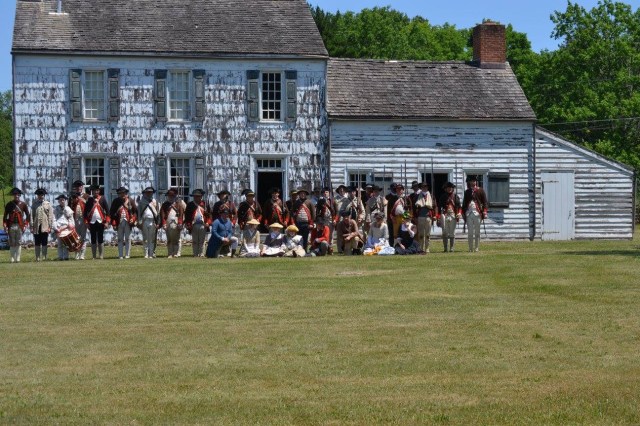
We had a Retaliator, a Pine Robber, a Quaker, and a Slave-Owning Patriot. We managed a debate or two over slavery. We begged people to take the Quaker home with them. But we did not occupy the house, for the house was occupied by red-shirted volunteers who gave at least some of us the five cent Condescension Tour punctuated with, “But I suppose you’re not interested in that.”

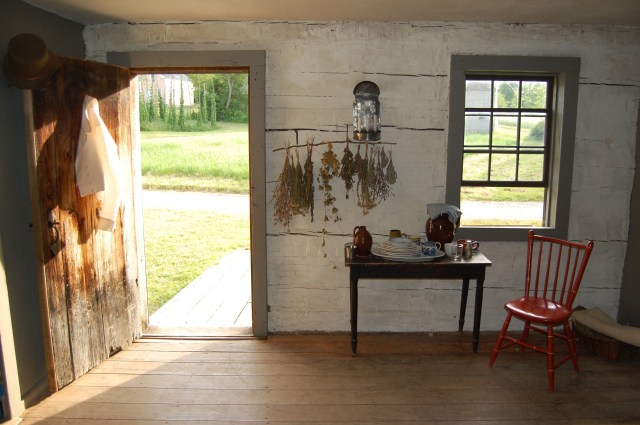
Actually, that look was one of sheer disbelief, sir, at the farm implements in a bedroom, the tidy piles of perfectly formed ashen coals under the cookware in the fireplace, and the roomful of flax accented with a snake charmer’s basket. In my line of work, I enjoy house tours, but find they generally go better when tour guides don’t point out all the flaws to me. Complaining about the state (which owns the site) and onerous regulations that make repairs expensive will also increase my look of horror and disbelief. But really, if you want full-on horror, kindly inform the Quaker that Japanese POW camps “really weren’t that bad” because we are thriving on confusion today.

The volunteers were thrilled by the marchers, and were clearly very positive about the event. They love Craig House, and the battlefield, but that sense of pride and ownership made it impossible for them to share the house with us, or to see us as anything but invaders– an Army of Occupation in our own right.
It’s my fault that I’m not an agile enough negotiator to convince recalcitrant octogenarians that my friends and I are safe to play with and will respect the house, and it’s my fault that I didn’t put in place all the lessons I’ve learned in the past decade. Then again, I don’t know that I would have had time to travel for meetings with the volunteers to generate buy in and support, given the maelstrom that was my life this past spring.
But it’s a lesson well-learned: interpreters will read voraciously, acquire tons of material, and turn that research into appropriately-dressed characters making interpretive points, but unless you work with the site and its volunteers or staff to create agreement about presentation, you’ll get about half the value of the work you put into the planning.
Many heartfelt thanks to everyone who participated, and to the organizers for letting me try out my interpretive model. Next time, I know I have to work with the site staff and volunteers to make sure that execution matches vision.


 When I climbed the stairs to Hosmer’s Tavern for Sunday dinner, the kind ladies at the front door told me, “Your family’s in the back room.” This directive gave me pause, for while I am one to argue that we each define our families for ourselves, I did not believe the young woman necessarily understood my theorizing on the dangers of calling people “families” when you don’t know their genealogy. Then I saw this image, taken at Jones House the evening before by the lovely Mrs LC, and realized that the young lady on the porch may have seen something I am too vain to admit.
 Mr S had the most meta experience of all of us, for as I photographed him, an artist was painting him drawing. We could not have had a better living history through literary theory weekend if we had tried. Mr B worked with the camera lucida, something that is beyond my abilities. (It is an unintentionally meta image of Mrs B photographing Mr B while I captured both of them: my junior year art history professor would be dismayed.)
 Representing leisure is something I haven’t done before. My idea of
  Kirsten Hammerstrom
You must be logged in to post a comment.