Frivolous Friday: Festive but Frigid

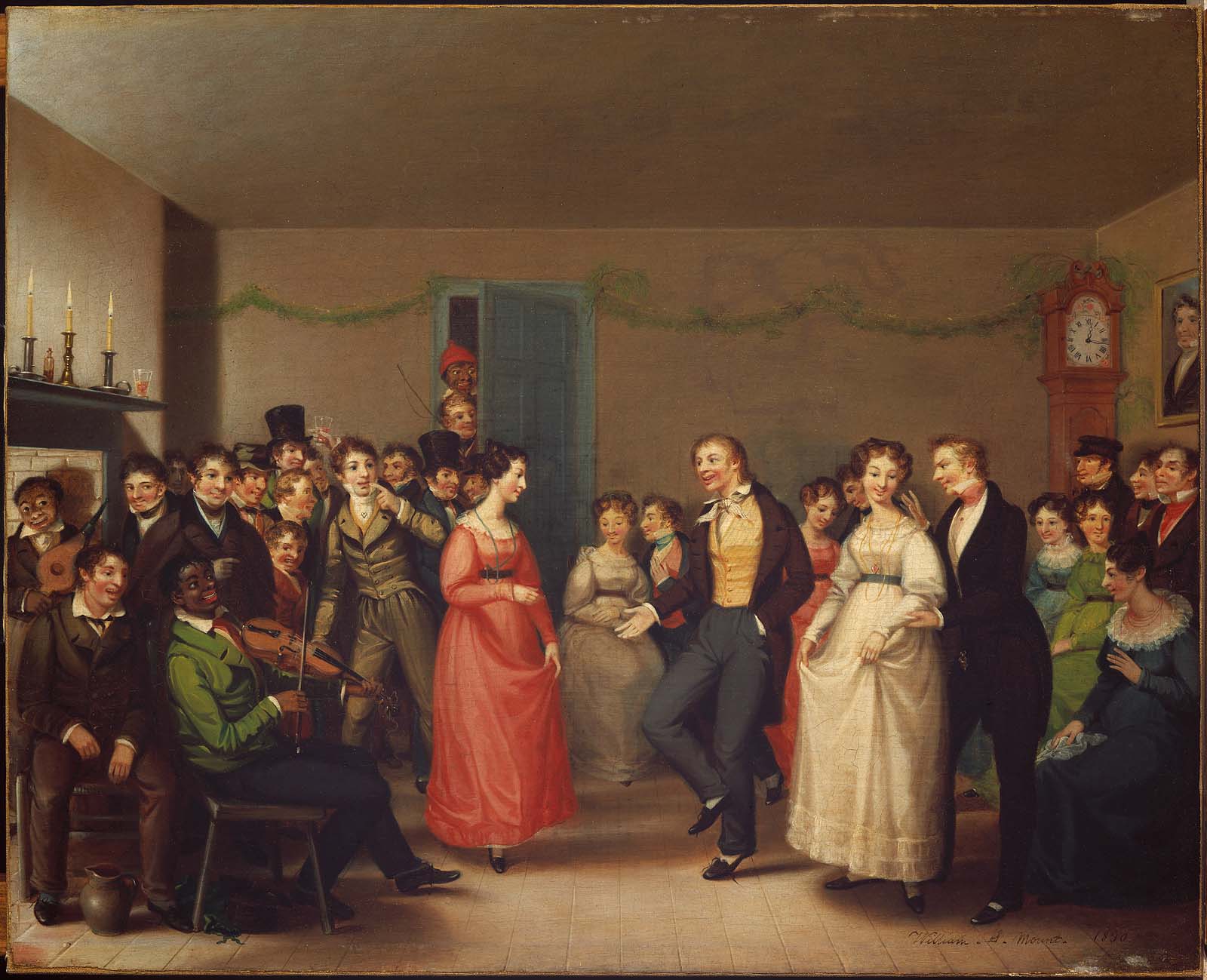
Rustic Dance After a Sleigh Ride, 1830. William Sidney Mount MFA Boston 48.458
Rustic Dance After a Sleigh Ride, 1830.
William Sidney Mount MFA Boston 48.458

I don’t know about your weather, but we’re in full summer in New England, sultry and humid, with the occasional thunderstorm and power outage to enliven the evening. A sleigh ride sounds like fun today– and I know we all just finished complaining about the snow of February– but a brisk ride followed by a dance would certainly round out this week.

1833 approaches faster than expected, so it’s time to pick that back up and get serious. Not just a gown but petticoats and, ideally, a new shift should be made. This may be the project that breaks my resolve and finds the Bernina back on my table for cording a petticoat.
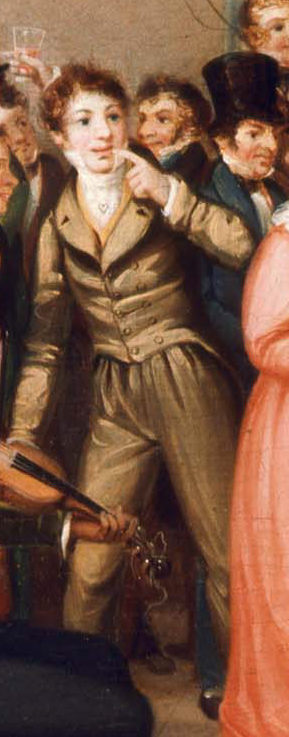
Detail, Rustic Dance After a Sleigh Ride, 1830. William Sidney Mount. MFA Boston 48.458

This image helps define the look of the early 1830s: not nearly as exaggerated as the fashion plates, these dresses and coats seem to fall into a progression from the 1820s– as you’d expect this early in the decade.

The gentleman at the back, in the drab colored suit, sports an interesting pair of trousers. I don’t think I know anyone ready to bust out the cossacks, but Mr Drab may be sporting a slightly modified pair. The collars and lapels show a shawl-shape that seems new, and modified from the more serpentine form seen in fashion plates– or else not yet as developed. There’s a range of headwear, too: tall hats on the left, a soft cap on the right. The Ladies’ Workbook has a pattern for one of those caps. Wonder how hard they are to make?
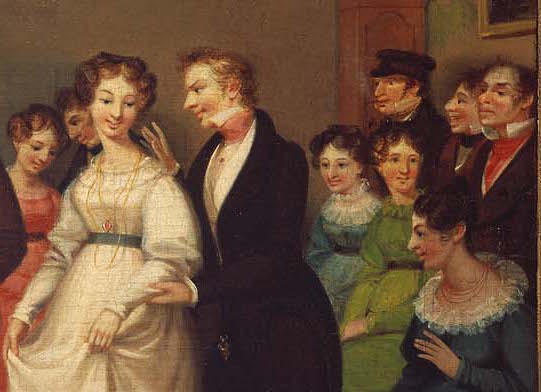
Detail, Rustic Dance After a Sleigh Ride, 1830. William Sidney Mount. MFA Boston, 48.458

In the detail, we can also see the women’s hairstyles, less exaggerated than the fashion plates with their high top knots, and within the realm of possibility for those of us not practiced in historical hairstyle recreation.

So much has carried into this decade: colored neck wear, ruffles or chemisettes under women’s gowns, men’s hair brushed forward. As always, it’s the details that count. Tall shirt collars, rounded lapels, ladies’ sashes, the shape of sleeves. This should be a fun decade to represent.

Rodentia, or, A Parable for Our Times

Once upon a time, as most of us were, I was in high school. It was not a stellar experience for me, but it was defining. Aside from the very few people who became my friends, and whom I follow along with even now, high school was populated with people who did not particularly care for me. Then as now, détente was a reasonable, if not always achievable, hope. But for some, there was a literal breaking point: a Rubicon, if you will. It started in sophomore French class.

John James Audubon. Marsh Shrew, Plate CXXV

We had a substitute teacher one Fall Monday. Her English was not perfect, though her French was; she was a regular teacher stepping in for our regular instructor. This was a pre-lunch class, but there were three 20-minute lunch periods. My class had second lunch; this meant that about 20 minutes into French class, a bell would ring, signaling the beginning of first lunch. After another 20 minutes, a second bell would ring, signaling the end of class and the beginning of second lunch.

John James Audubon. Bridled Weasel, Plate LX

On our first day with the substitute, when the first bell rang, two boys convinced her that class was over, and no one contradicted them: we left at the 20-minute bell. The next day, the same boys tried the same ruse. Three quarters of the class walked out, but at least two other girls and I stayed: I raised my hand and explained that the first bell was not the end of our class period.

John James Audubon. Black Rat, Plate XXIII

My nickname became then and stayed The Rat. My classmates taunted me and chanted The Rat in the halls. Drawings of rats were stuck to and shoved inside my locker. This lasted until graduation, when we had almost forgotten the origin of my nickname.

When I tell this story now, I don’t look for pity or sympathy: this is a pathetic Lord of the Flies played out in the grey-carpeted halls of a Chicago Gold Coast private school, where the stakes were low so the repercussions were high. This was where I learned about clothing conformity in the guise of Polo shirts, Tretorn sneakers, Levi’s 501 jeans, and Brooks Brothers shirts. I wore my classmates’ fathers’ hand-me-down shirts from the thrift shop; I wore their grandmothers’ dresses. A Rat requires some style.

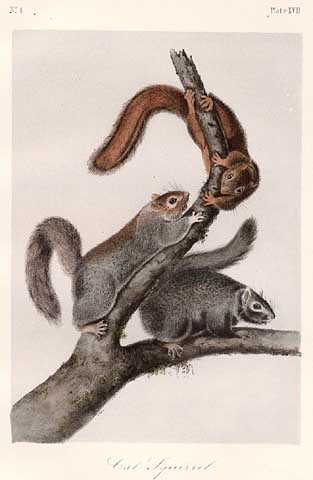
John James Audubon Cat Squirrel, Plate XVII
John James Audubon. Cat Squirrel, Plate XVII

As an adult, I find that people haven’t changed all that much. The cliques still exist, and while adults don’t usually shout at you, ostracism and snubbing are deployed regularly. But I learned long ago how to be alone, or with a few true friends. Evidence always speaks for itself.

Afternoon in Cambridge

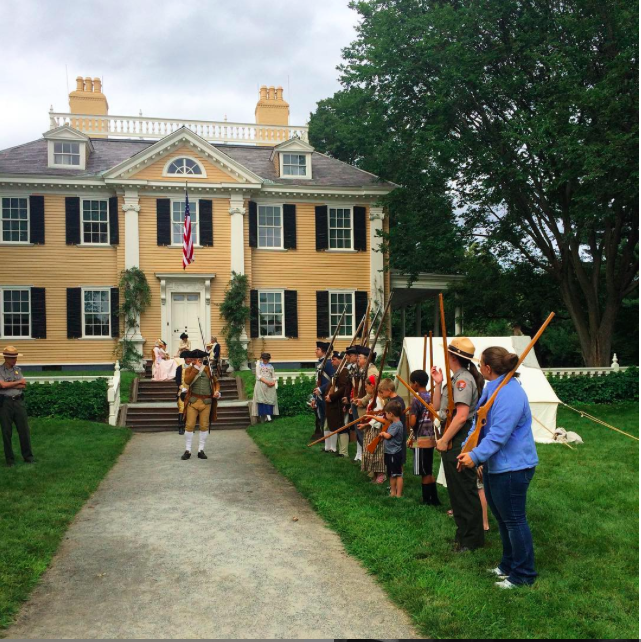
Cambridge. We’ve been there before to cause some mild lawn-based havoc and this year was much the same. We were on our own on the lower level, with just the six-plus-me of some abbreviated form of Soper’s company. Longfellow House is a very lovely site, and the lawn is large enough for a wall tent, drilling, eating, and general mischief.

Longfellow House, Cambridge. Photo from @longnps on Instagram

I packed our lunch in a series of linen bags in the wallet, and stuffed a gown skirt and sewing box in the other end, with a bowl and a mug. I brought the small pitcher and a glass, with the intent of selling ‘gin’ to the militia, but had only one taker. They got into enough trouble themselves with filthy faces, pilfering, and stealing the captain’s books.

unknown artist, 18th century, The Encampment in the Museum Garden, 1783, Aquatint, hand-colored, Yale Center for British Art, Paul Mellon Collection

It’s no immersion event, what with traffic on the street and tourists dressing in Mr Townsend’s best* but there are moments at any gathering when you become so engrossed in what you are doing that you forget where you are. This time was no different: I don’t recall how it started, but we took off down Brattle Street with Sergeant Cooke crossing the yard in hot pursuit– only to be stopped by the wall. He turned the stone barricade into a large and angry goose, neaatly solving solving the problem of not being able to scale the wall.

James Sowerby, 1756–1822, A Goose, undated, Watercolor and graphite on moderately thick, slightly textured, cream wove paper, Yale Center for British Art, Paul Mellon Collection

I don’t think I’ve ever bolted that fast in stays before, and it wasn’t the best idea I’ve ever had, but who cares? It can be done, running in stays, at least for short bursts.

There was much discussion of the filth of the troops, and their need to bathe; despite our best efforts, we could not quite get a satisfactory rise out of the officers, though some soldiers had clearly rolled in dirt. (It’s of a much better quality in Cambridge, you know, where you can wear the Harvard Yard.) There was an attempt at bathing at the Great Bridge, but in the end, one private’s face was washed with an apron corner dipped in ‘gin.’

Benjamin West, 1738–1820, American, active in Britain (from 1763), The Bathing Place at Ramsgate, ca. 1788, Oil on canvas, Yale Center for British Art, Paul Mellon Collection

Satisfying all around, really, from the recitation of Mr Pickering’s manual with its endless repetition of ‘butt,’ meaning musket, entertaining the simpler, uncivil soldiers, to the meal of bread, cheese and cherries, to the chasing. The audience was small, but well entertained if they were paying any attention.

*Oh, NPS, what were you thinking?

Mind the Gap, or, The Basket Case

I was in the midst of planning yet another maid’s dress (some of us have all the luck) when a friend alerted me to an online discussion that drew from my recent post on baskets. The comments — which I skimmed but twice– made me think about philosophy and intent.

Engraved by John Raphael Smith, 1752–1812, British, A Lady and Her Children Relieving a Cottager, 1784, Mezzotint and line engraving on medium, slightly textured, cream laid paper, Yale Center for British Art, Paul Mellon Collection

There are two approaches to developing a living history persona and appearance I’ll consider here: one prescriptive, and one not. The prescriptive, didactic approach tells you what to wear and carry. Some folks like that. It is completely correct in some cases: soldiers, for example. You want to fall in with a unit of Light Infantry in 1777, it’s generally more convincing if you don’t wear the 1781 coat. Not everyone cares: some people will keep on wearing the Brighty Whitey Hunting Frocks and 1780 coats at reenactments commemorating events of 1776. Those folks can no longer be reached by prescriptive standards, and my preferred approach probably won’t reach them either.

Joshua Cristall, 1768–1847, British, Young Woodcutter, 1818, Watercolor with scraping over graphite on moderately thick, slightly textured, beige wove paper, laid on thick, slightly textured, beige card, Yale Center for British Art, Paul Mellon Collection

Mindful reenacting or living history sounds pretty nutty, but that’s what I would encourage. Thoughtfulness. Consideration. Not just the what, but the why. Why you wear or carry something can be as important and interesting as what you’re wearing and you’ll be all the more convincing for thinking it through. Thinking, not rationalizing. How appropriate is it to be in your best clothes carrying a basket also used to carry fire wood? You have to answer that for yourself, and if you’re doing it right, the answer will not always be the same– nor will the question!

Print made by James Bretherton, ca. 1730–1806, British, A Maid, 1774, Etching on moderately thick, rough, blued white laid paper, Yale Center for British Art, Paul Mellon Collection

This isn’t the easiest way to go about anything, asking all these questions, but for some of us, the experiences make it worthwhile. You won’t always be able to do, carry, or wear what you want.* But the picture you create of the past will be more accurate and more engaging if you think more and justify less.

Look, I threw down about that floppy bird basket, but I have to provide food to troops this Saturday in Cambridge. What the heck will I carry it in? What will I take my sewing in?**

Probably a wallet and a bag, unless I can pack that floppy basket convincingly– it is entirely suitable to my lower sorts-stained gown impression– but if I can’t, I won’t take it. And that’s just one less thing to carry.

*I’m pretty much always the maid to make scenarios work, and while it doesn’t come naturally, art imitates life.

**Prays no one gets the bright idea to bring (shhh) tents to work on.