Tailoring: It’s the thing, right? A well-cut, well-fitted, and well-crafted garment fits like no other. Why do you think I prefer my historical clothes? They’re fitted to me, so they feel right.
There are lots of resources, if you’re willing to dig a bit. Last year, thanks to Mr Cooke, I brought you The Taylors’ Instructor. Good stuff, right?
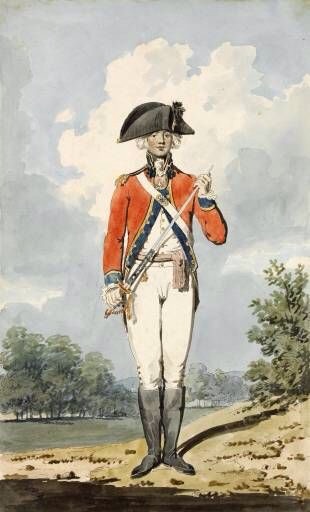
Officer of the Third Regiment of Foot Guards, 1792 British Museum 1890, 0806.2
Every now and then, my interests collide in unexpected ways. While searching the Tate Collection for something completely different, I came upon this image of a fine-figured officer. I love a man in a uniform, and this one comes with a bonus: the curator’s comments. “According to Binyon the outline etchings are by Thomas Kirk, after a drawing by Edward Dayes, coloured by Turner as a boy.”
You can see Turner’s style latent in those trees and in the dramatic sky, and even in the shadow that lies at the officer’s feet.
18th century coloring book, or image defaced by inchoate genius: you be the judge.
One of the best things about Genesee last weekend was a roof. After driving through torrential downpours on Friday, we were grateful for a house to sleep in, instead of a tent. I’ve never woken up to find my hip planted in a drainage channel (Saratoga was stormy) but Friday night would have provided ample opportunity for somnolent soakings.
Foster-Tufts House, photo from Genesee country Village & Museum
So we were set, right? Each of us had bedding (many thanks to Mr JS for the loan of a linen sheet: I still regret the vintage sheet I did not buy) and a real bed, a pretty plush situation, really. The only tricky part was getting into bed, and then adjusting yourself once you were on the mattress. It’s not that the bedding was going to rise up and cast us out. It’s not that the accommodations were exceptionally uncomfortable to modern, bed-spring accustomed sleepers.
It was the noise. The bed sacks were filled with packing peanuts and other inorganic materials that crunched and cracked and popped and creaked and grumbled with an and tiny movement. There was a solution, though. There’s always a solution.
Weekend billet: pretty swank, actually
Synchronized spinning. Without thinking about it too hard, though with deference and consideration for fellow occupants, we quickly learned to turn simultaneously. As soon as one of us cracked the wall of sound, the other two would shift. Problem solved.
One of the most common questions you get when you’re wearing historical clothing is the undying, “Aren’t you hot in those clothes?”
A heavily perspiring visitor wearing practically nothing usually asks this question, and the standard reply is a variation of “Aren’t you hot? In really warm weather, everyone is hot. But natural fibre clothing wicks the moisture from the skin and helps to keep you cool.” My internal response (vocalized only once) is, “Why yes, I am—and thank you for noticing. I work hard for this look.”
The “aren’t you hot” question is often followed by, “Wow, and they didn’t bathe, so everyone really smelled.” You try not to think of that Monty Python sketch about Britain’s deadliest joke program in WWII and move the conversation on to weekly laundering of body linen, multiple shifts, shirts, and under-drawers, and the general hygienic practices of the past.
What struck me after a sticky weekend is how much I noticed the smell of modern people.
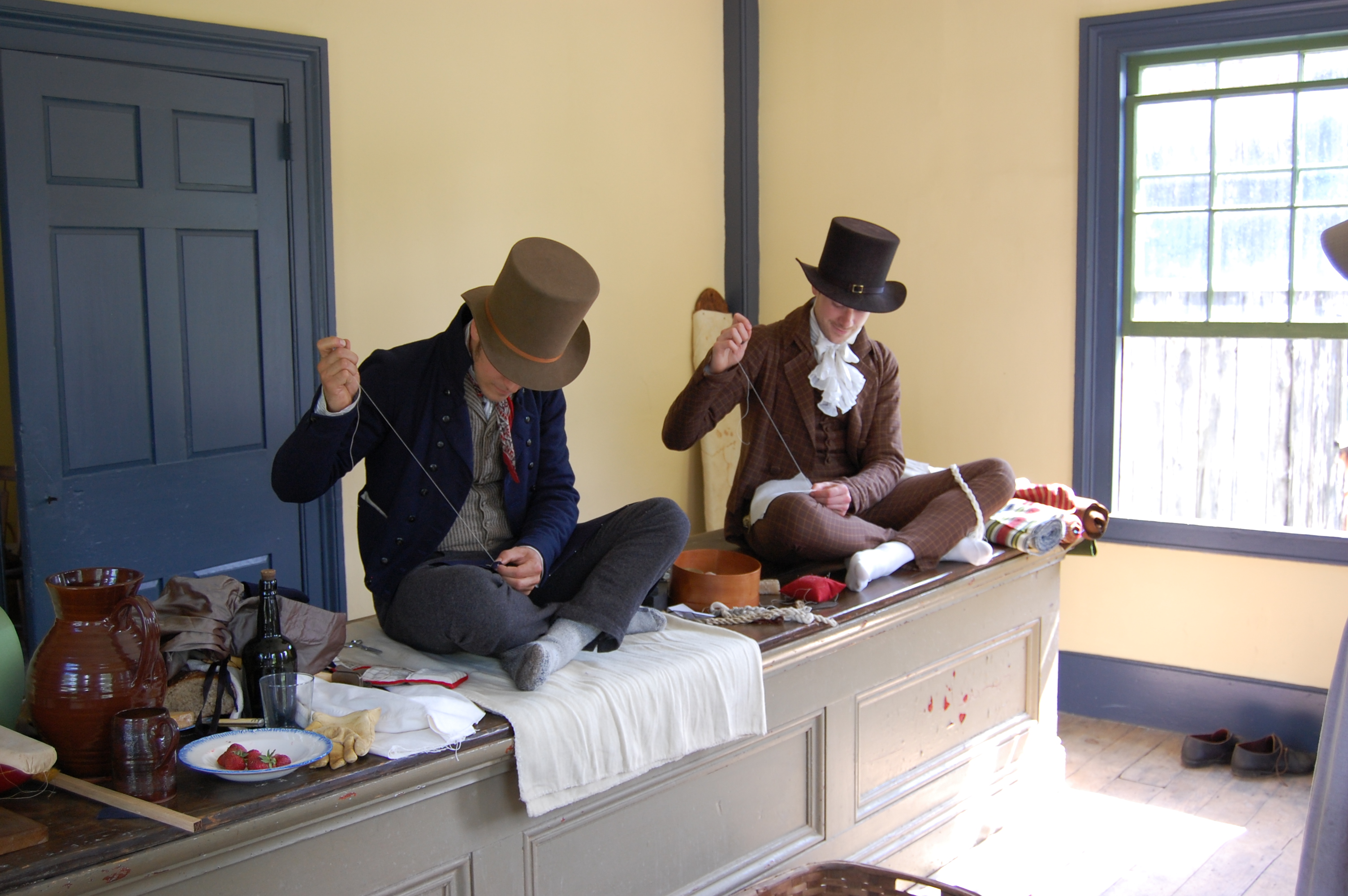
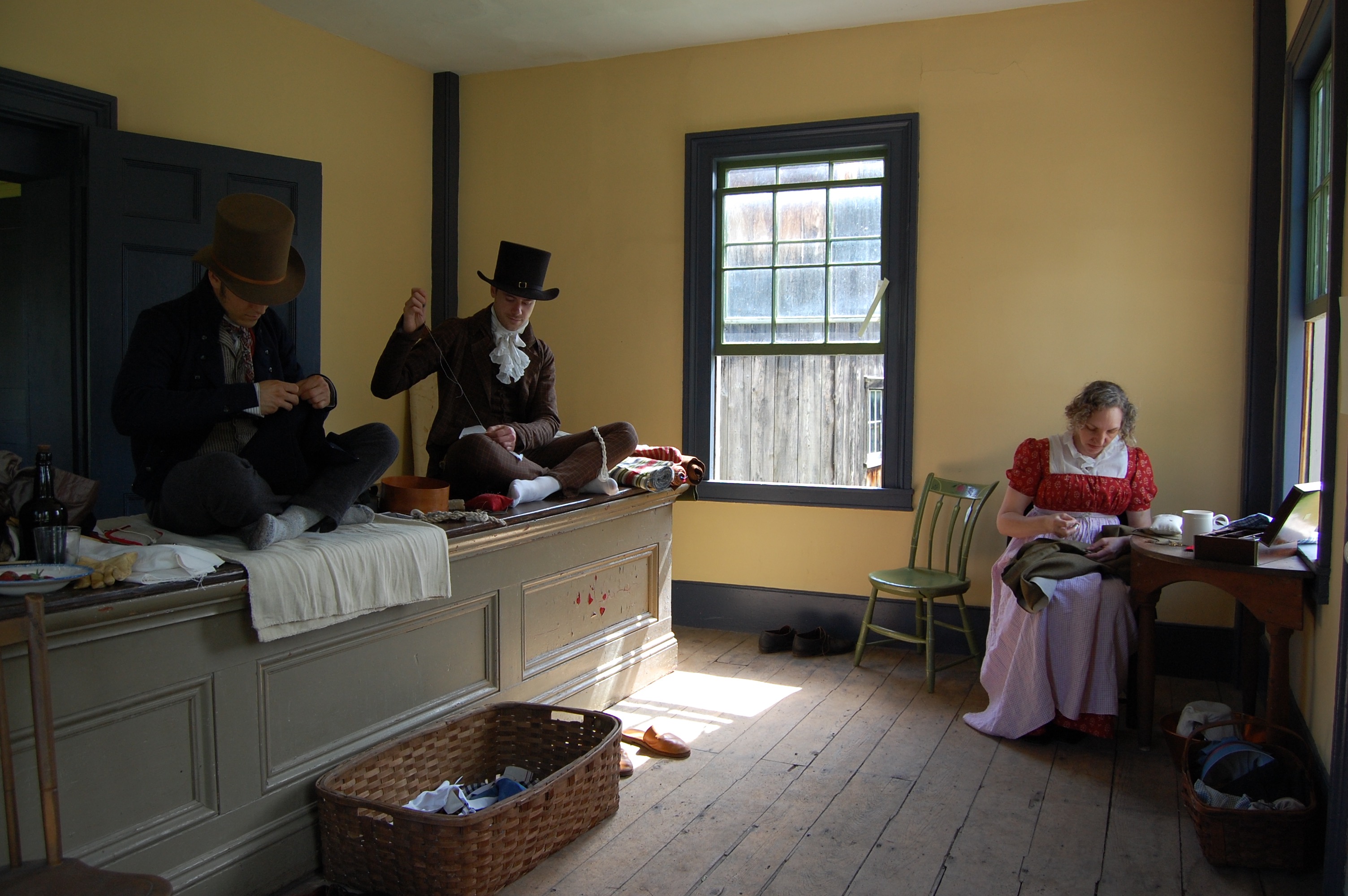
two tailors and a tailoress
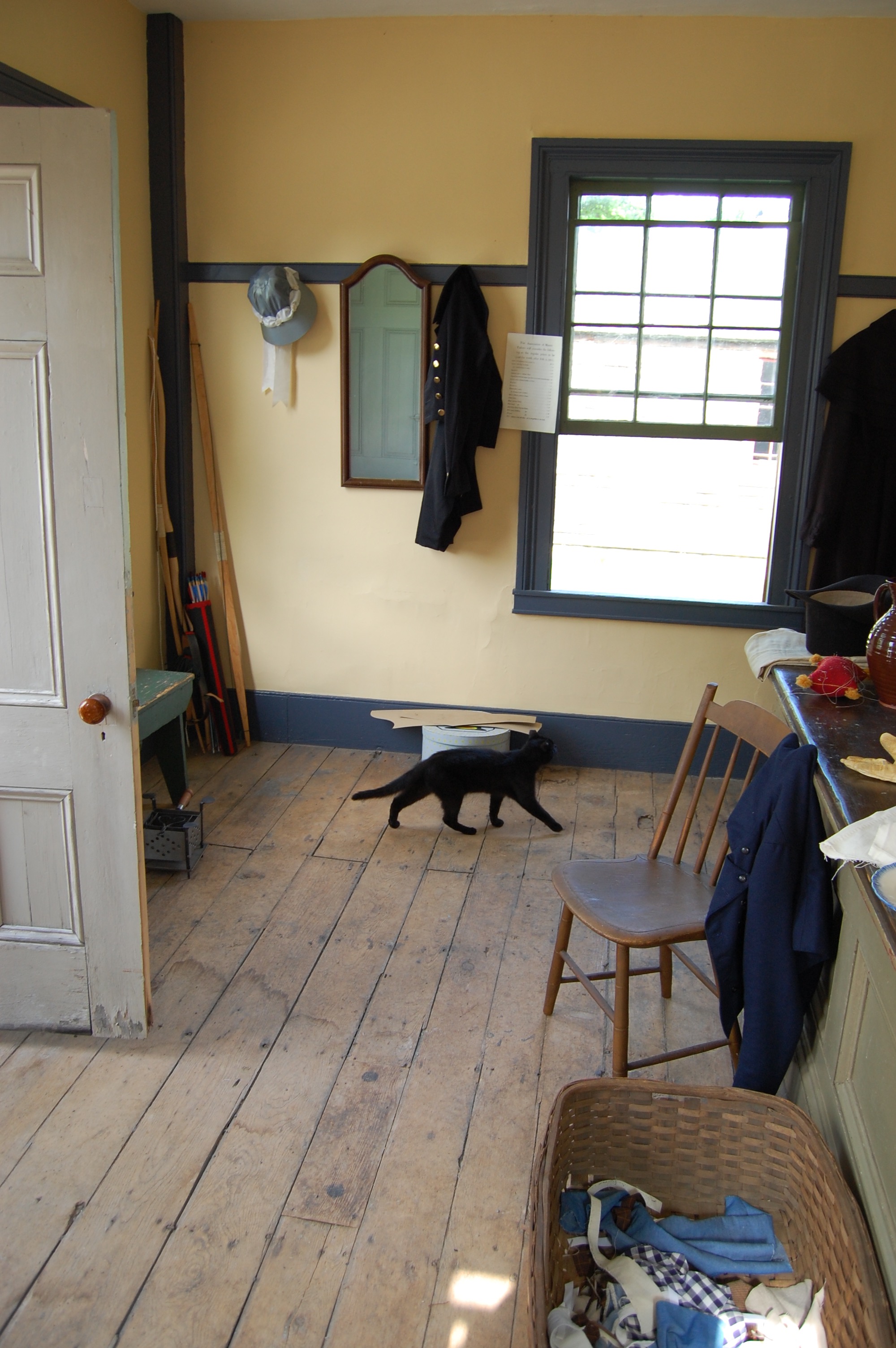
My traveling companions and I bathed on Friday morning, drove for 7+ hours in muggy weather, slept in our clothes, wore wool, cotton and linen in rain and thick humidity, sweated in the tailor’s shop, slept in our clothes again, and spent another warm, close, day in muggy weather, including grave digging and pall bearing. But as feral as my shift may have been on Sunday night, I never smelled us.
Mr H reported that his wool trousers were really stinky in the rain, and I think his white Spencer was well-seasoned even before this weekend, but I didn’t notice anything. Mr S’s soaking greatcoat was whiffy only at extremely close range.
What I did smell were modern perfumes, deodorants, and hair products. Those linger around their wearers and trail behind them, sometimes eye-watering in their intensity. I encountered lingering perfume in a bathroom at the museum, and we were overwhelmed by cologne at diner Monday morning: wow, people must really smell now, of petrochemicals.
more wool
This is not to say that homeless people and sulky teenagers don’t smell of unwashed bodies and clothes, but people in the past may not have smelled quite as badly as we think. They washed, if not bathed (bathing being full immersion washing) and by changing body linen and airing their clothes, they kept reasonably clean.
There was plenty to whiff in the past: wastes of all kinds, stagnant bodies of water used as dumps, rotting foods and corpses. But I’m not convinced that we haven’t simply exchanged one set of smells for another of different origin and intensity.




 Kirsten Hammerstrom
You must be logged in to post a comment.