
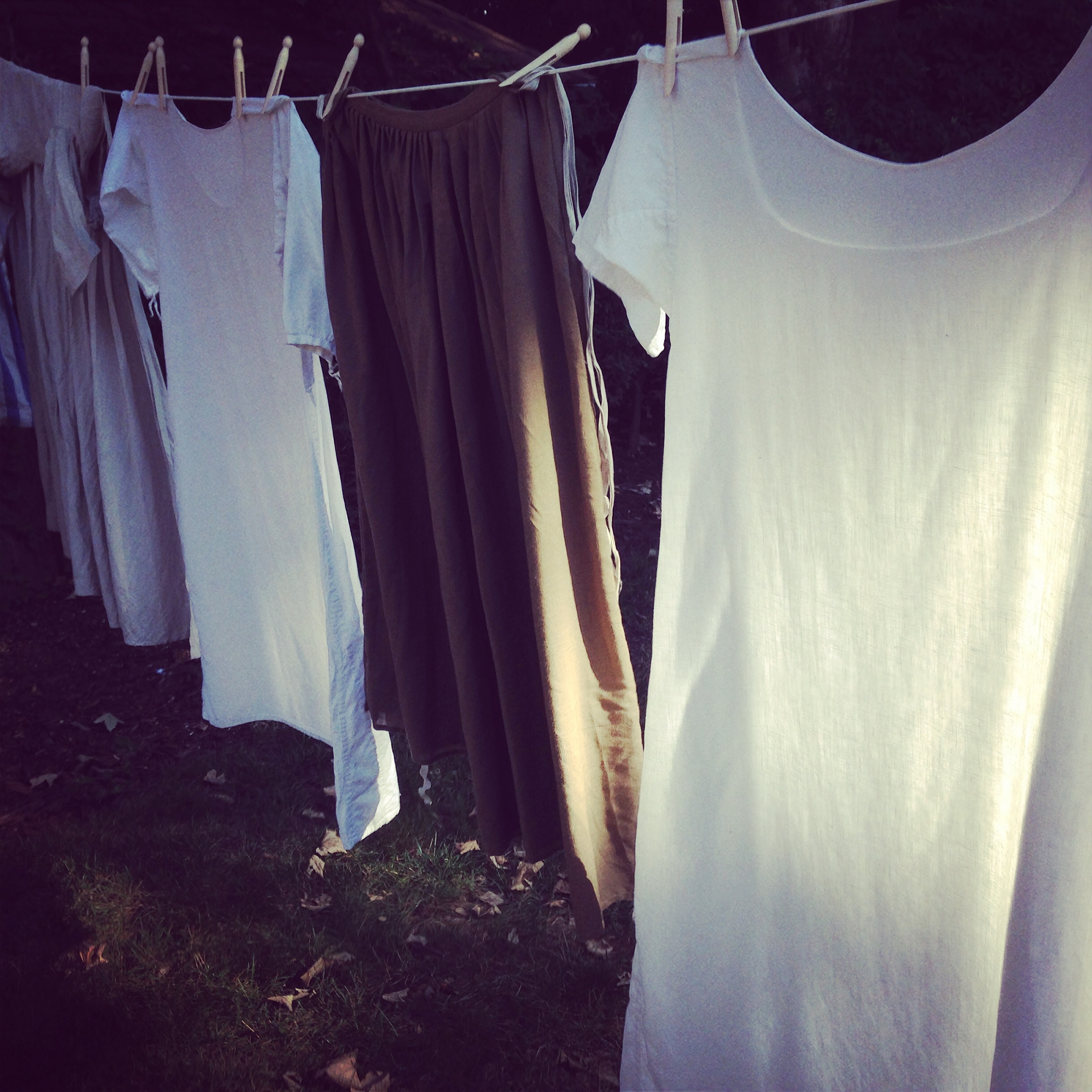
Wash on Monday

shifts and petticoats on a line
Living history laundry

We spent Labor Day laboring at home: even the Young Mr spent the day working on a five page essay (due Wednesday) for history class. I spent the day tidying the house and washing clothes from all centuries.

Of our historic clothes, I don’t often wash more than body linen (shifts, shirts, stockings) but the petticoats had not been washed in some time; in the end, I washed the tow and blue striped one, but only aired the Virginia cloth and madder linen. Since I may not wear these again this year, washing and airing seemed warranted.

It’s incredibly easy to wash in this century, with the luxuries of indoor plumbing, a hot water heater and a washing machine. At Walloomsac, though I didn’t do any laundry, we were always fetching water, and I think of how much water we use, and how easily.
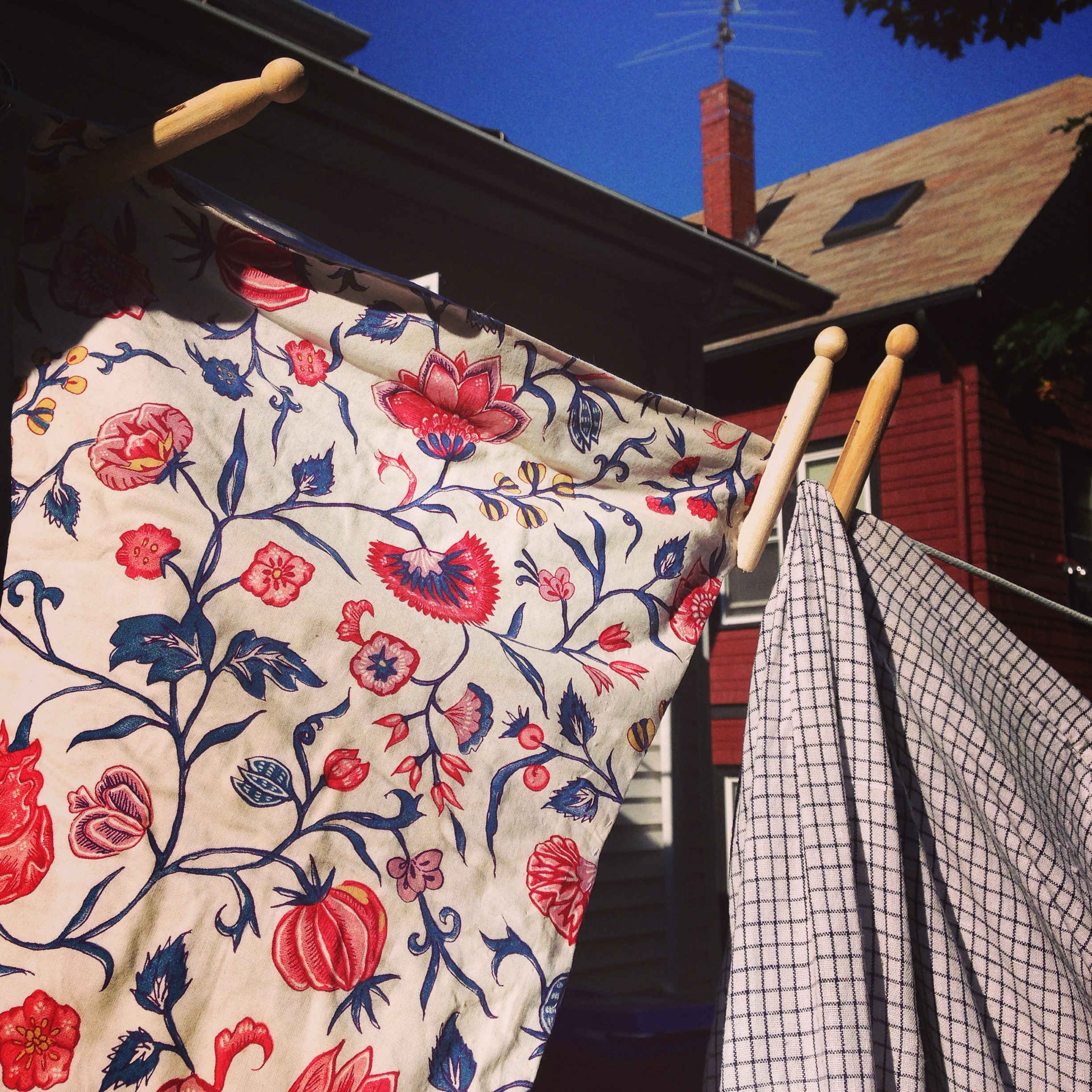
chintz and checked clothes on a  clothesline
Red, white and blue

While I stitched a dress (new, though the mending pile is growing), I listened to biography of the Buddha, and thought about mindfulness and living history.

What is there to learn from sewing a gown, or hanging my wash on the line? How much does it matter that sunlight makes my shifts brighter, or that the dress in my lap is not a exact replica of an extant garment, but rather one made using period techniques, a close analog of a period fabric, and is cut to period style?

So little remains of the vast middle and smaller lower classes that it would be stifling to limit oneself only to exact replicas. And in any case, we can never recreate the mindset or worldview of the people of the past. We can only mimic their processes, read their words, and study the things they have left behind in our best attempts to understand them.

Two Decades in…

Tureen in the wild
Tureen in the wild

On Wednesday, Mr S and I will mark our twentieth wedding anniversary, and due to some unfortunate timing, one of us has a medical procedure scheduled for that day, so we won’t actually celebrate on the day itself. (In sickness and in health, you know…)

Instead, we went antiquing in New Bedford on Sunday, after Mr S spent Saturday clearing brush at Minute Man National Historic Park. New Bedford was a nice change from the places we usually go in Rhode Island, and I always enjoy looking in Massachusetts, because objects there are typically free of Rhode Island connections, which means I can actually make encumbrance-free purchases.

I don’t know how encumbrance-free this purchase was…for now we are encumbered with a large hard paste porcelain tureen decorated with cranes and a federal eagle.

The platter it sits on may not be its original platter, but do I care? No. Look at that fantastic, crazy thing. The face the Young Mr made when this was unwrapped in front of him was priceless, but he has long questioned my sanity; now he will question my aesthetics.

Pride of place, with a friend's painting and Mr B's hats
Pride of place, with a friend’s painting and hats by Mr B

It sits in pride of place on our mantle now, and as far as I can tell, it’s typical of the shape of tureens made for the American market ca. 1790-1810. I’ve not seen the cranes before, and I still haven’t found this pattern in a museum or auction house, though Winterthur’s tureen collection is pretty amazing.

If the thing is real (and it looks and feels like the real ones at work), its voyage has been  incredible: from China to a port in Massachusetts, down through time to a shelf in an old mill building, to my mantle.  Think of the person who ordered this– and the set it was likely part of– by letter, and then waited for months for the goods to arrive. Some sets were as large as 250 pieces, custom-monogrammed at the factory, and then packed into barrels and crates lined with straw and loaded onto ships bound back to the East Coast.

I’d love to know this piece’s story, but even without a provenance, the object itself is pretty astonishing, and fits into our already eclectic china (and yes, mantle business).  Now, for a soup party!