Tactical Strategies

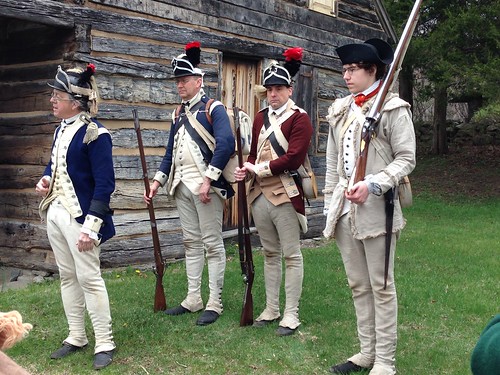
One of the things I liked best about this year’s School of Instruction was the Petite Guerre demonstration that followed a discussion of those tactics by Dr Stoltz of the 5th NY.
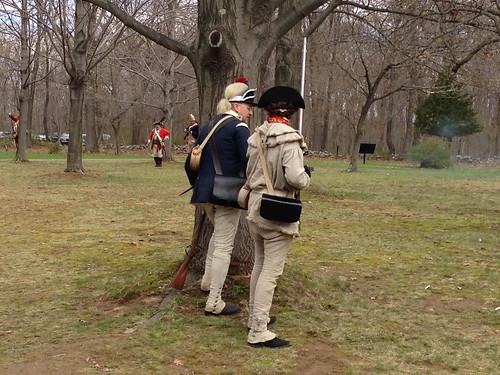
Mr McC & the Young Mr share a tree; note British officer and Hessian

Demonstrating skirmishes instead of linear warfare makes sense, given the numbers of men who take the field at events, and the smaller engagements will reflect exchanges common between the sides during the war.

What I like in particular is that using ‘petite guerre’ tactics requires the commanders and soldiers to tailor their actions to a site (site specific immersive experience: you cannot go wrong) and as the action unfolds, soldiers at all ranks are forced not only to move but also to think. Any action where the interpreters have to think is likely to create a better experience for visitors—and no great surprise, that usually makes a better experience for interpreters. It also flatters the site managers and visitors, who will appreciate that you’ve taken the time to explore and understand their place, and its place in history.

While you don’t necessarily want to fight the Battle of the Comfort Station, skirmishing around a site with buildings provides an objective, while multiple buildings and some woods or undergrowth provide cover for the Light Infantry troops and opportunities for deceit.

Of course, depending on troop size, it may be that each man needs his own tree. On Sunday, the Young Mr kept close to Mr McC, demonstrating troop [leg] length.
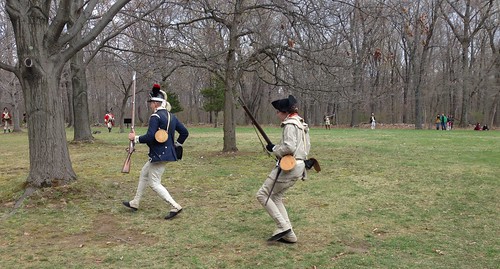
It’s hard to be invisible when you’re tall.

But I do mean this seriously: scaling events to available resources allows for a better interpretation.

That’s common sense, and sound museum practice, and that’s pretty much the business living history practioners (aka reenactors), are in: interpreting the past to visitors. Best practices for professionals and hobbyists are grounded in the same principles:

  • Primary source research
  • Material culture research
  • Site, resource, and audience- appropriate delivery
IMG_1386
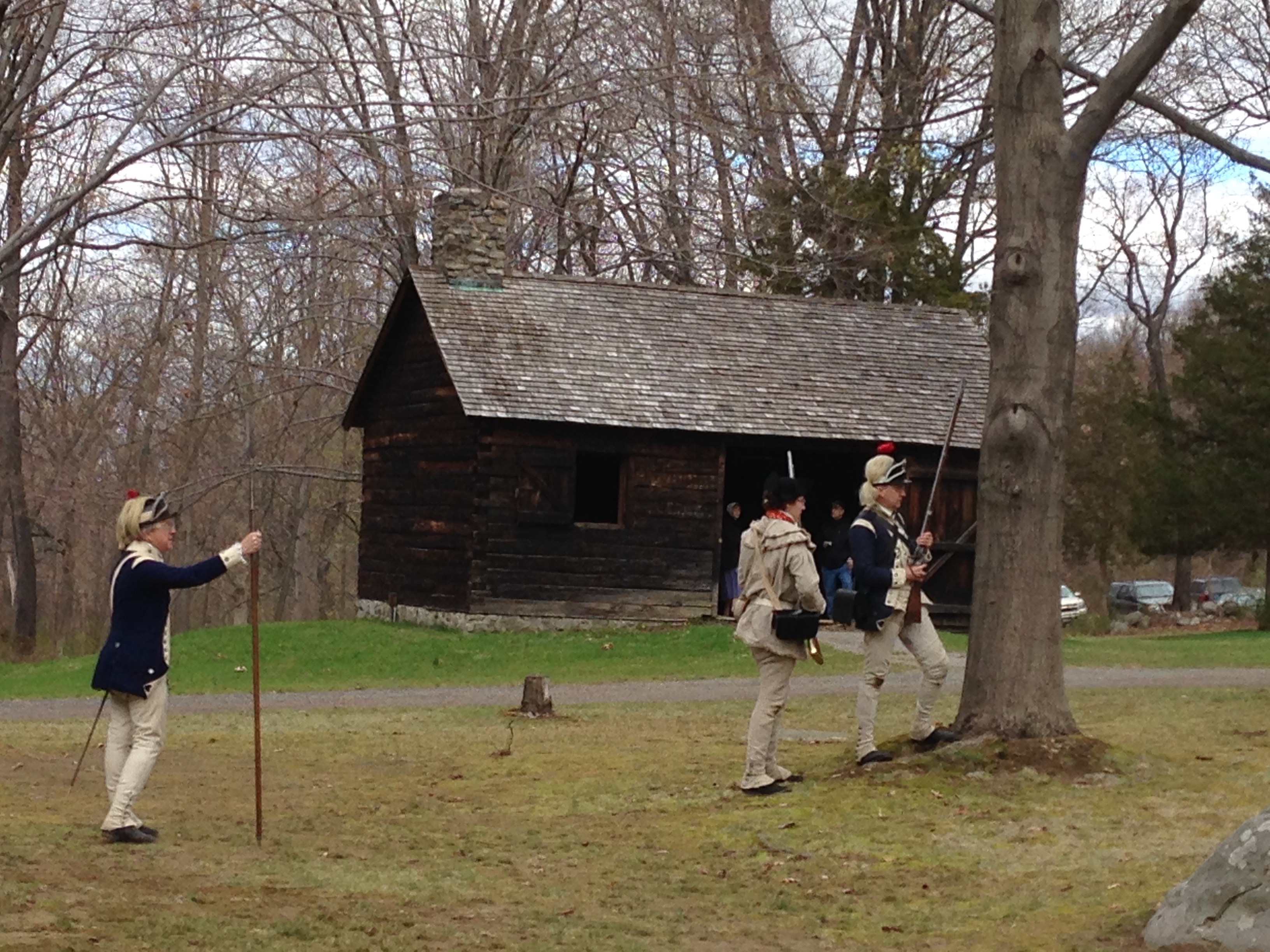
Direction provided by Mr C with spontoon.

Building an encampment and tactical demonstration on the first two principles grounds the event in in historical authenticity. Adding the third principle, and increasing the use of smaller group tactics, tailored to the participants and site, would be a subtle but strategic shift to build a more engaging experience that better educates visitors and might even attract new recruits.
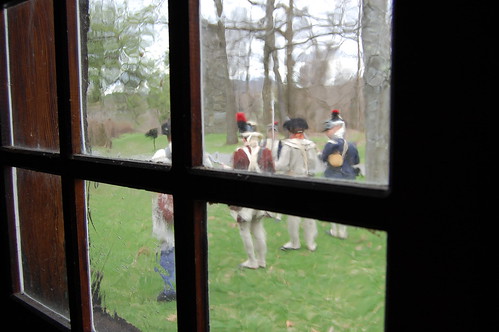
Dirt Stew & The King’s Oreo

What Lights through Temple window Break?

What do you do when the kettle tilts off the pothook and spills onto the floor?
Scoop the food back in and keep cooking.

That’s how you make dirt stew, with just enough ash to keep the texture interesting at the bottom of your bowl, plus ham, onion, turnips, parsnips, potatoes and carrots. If you wash the inside of the kettle later in your motel bathtub, you will add to the list of very bad things you’ve done in the bathrooms of temporary accommodations.

On Saturday, the original event plan called for a camp kitchen demonstration; this was nixed because a long string of permissions could not be obtained in time, so we fell back on bringing the three sticks and two kettles. Outdoor fires of all kinds were nixed Thursday because of red flag warnings, and after downpours Friday night followed by rain on Saturday afternoon, we ended up cooking in the back room of the Temple building.

Third from the left, Mr S in the ‘Ugly Dog’ coat.

Some of us were too focused on getting food into the kettle to tidy up the surroundings, and that is why you need several people in any group: someone has to keep their head and clean up the wreckage of previous occupants. Fortunately for us, Mr McC managed that while the Young Mr swarmed around like a cat wanting its dinner, I cut vegetables and Mr S stewed about spilling the stew.

In the end it was a cozy evening boiling roots and hearing stories. I took no photos because that would have ruined it, but Mr S kneeling before the fireplace in the Ugly Dog coat and overalls as the last of the light came through the watery glass made a Vermeer-like and beautiful sight.

On Sunday morning, Our Musician Friend (who has turned his coat, and now sports yards and yards of lace and a bearskin hat nicknamed Lamb Chop), produced a package of Oreos from his haversack, and the Young Mr and I took the King’s Oreo with pleasure and no commitment.

Research for Reenactors

that's Old School. The Library at the University of Göttingen (18th Century)
that’s Old School. The Library at the University of Göttingen (18th Century)

I could not figure out where the hits were coming from, but looky here: Research for Reenactors links to some previous posts here (in the days before Frivolous Friday).

If you are a beginning reenactor, or someone who wants to refresh your presentation, I think this librarian’s guide is a good one. There’s excellent logic in the tabs and good suggestions. Thank you, Laura, for including me, and for such a wonderful resource.