
Some of us who re-enact the lower sort had to go to a party like this: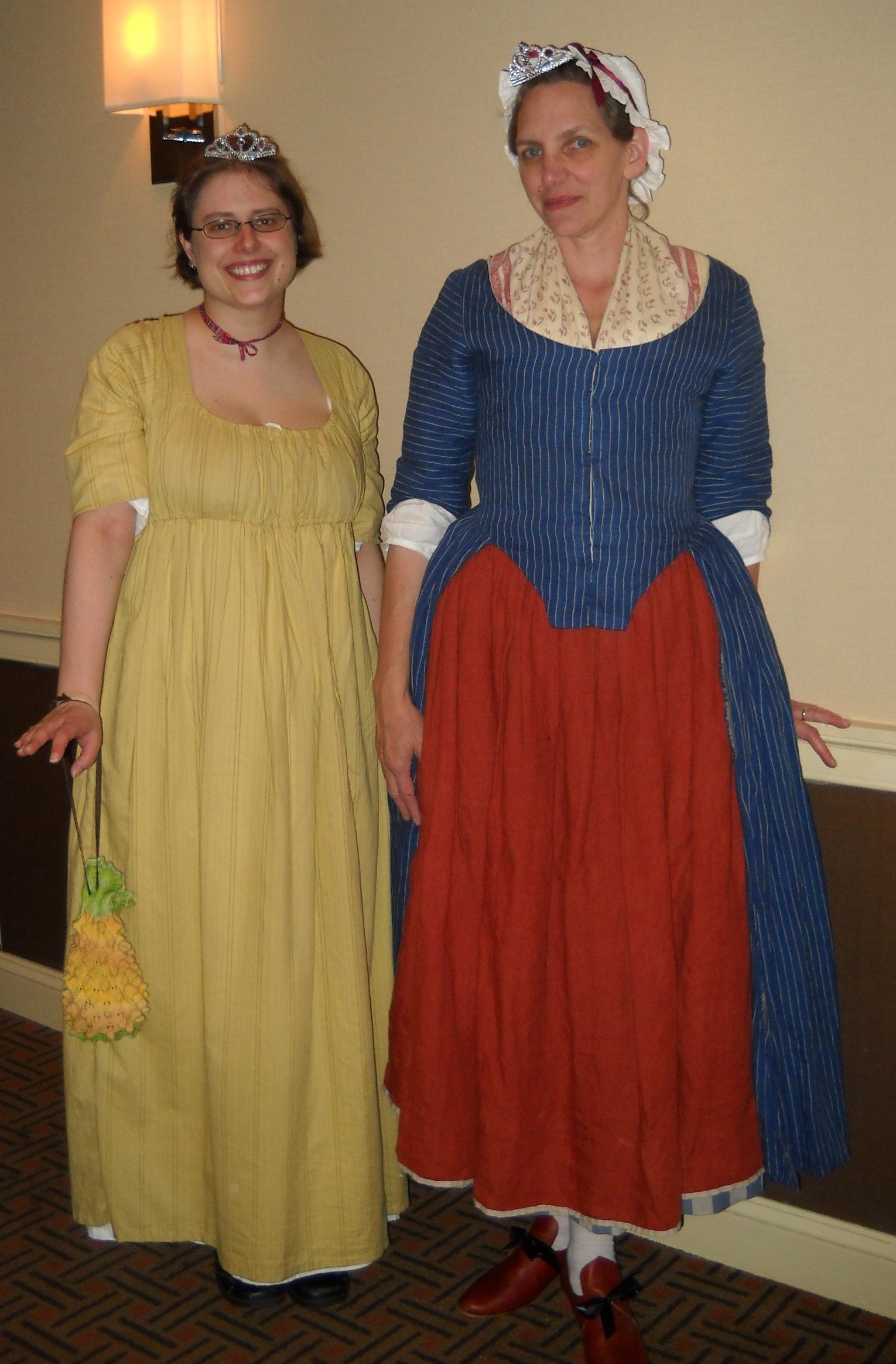
But before that, I learned a lot.
The Basics
- I am a better seamstress than I think I am
- There are some classes I could teach
- I’m going to need another hip replacement
- I need to learn to have fun!
The most important statements are probably the first and the last; I do actually know what I’m doing, more or less, enough to know that I learned a few other important things.
The Fine Print
- My 1790-1810 stays need to be re-done completely; they’re too long.
- I need a new 1750-1770 short gown pattern
- My black bonnet rocks
- I want a shiny party dress
- O.M.G., I met Sharon Burnston!! She was fantastic and I so enjoyed both of her classes. I learned the most in both of them.
Those stays have been troublesome since I began, what with tossing out the very first pair I attempted, and the wriggling and riding up with wear of the second pair. It was in Jenny LaFleur’s Fitting Yourself class that I figured out (slow, I know) that I should put my pair next to Dana’s. Dana is long-waisted, I am not. Dana’s stays and mine were the same length. Light dawned: If our stays are the same length, mine are too long.
Sigh. Starting over… Oh, well. New stays will fit without irritating me, I can get the cup right and the busk will stop trying to meet new people, and when they’re done, I can make lovely dresses that will fit and that I will not fuss with.
I could even make something like this, and have a real party dress for the next time I go away.


 Kirsten Hammerstrom
You must be logged in to post a comment.